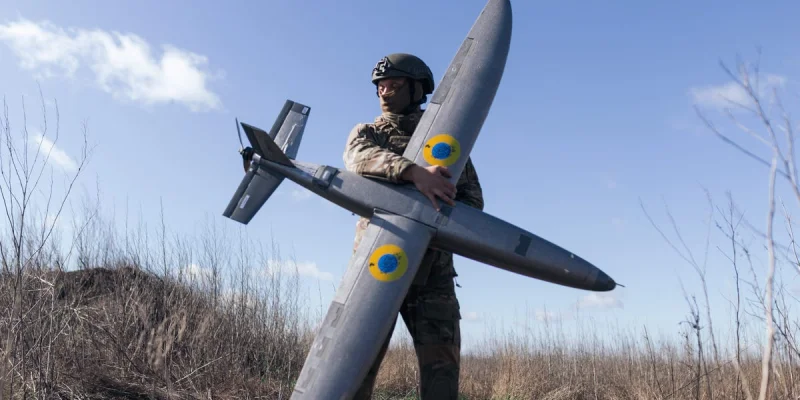
Ukraine’s mid-range strike drones are getting better fast on the battlefield, but not every system reaching the front is ready to fly. A Ukrainian National Guard pilot known as Spring said new drones arriving for combat use in early 2025 often needed heavy testing because some would stall before takeoff, lose control after a few minutes or fail on batteries.
Spring, who has tested more than 10 types of mid-range strike drones for Typhoon, said the pace of change is visible in the sky and on the ground. She said she can fly up to 11 sorties a day at practice ranges, with each flight lasting 30 to 80 minutes, as part of a process meant to decide whether a system is fit for combat crews.
That work matters now because mid-range strike drones have become one of Ukraine’s clearest battlefield advantages. Analysts say they are helping Ukrainian forces hit logistics, command posts and transports in rear areas, and some newer models use AI targeting so they can keep flying after losing contact with the pilot’s control station. The systems Spring tests are mostly Ukrainian-made, and they generally fall in the $1,000 to $15,000 range.

But the upgrade is not automatic. Spring said the first drone system she tested in early 2025 would stop working at times, its software could stall before takeoff, the controls sometimes became unresponsive after a few minutes and the batteries could fail. “In every sortie, everything that could go wrong went wrong,” she said of that system. Other drones have gone through approval after only a few tests, while some have required dozens of flights before they could be cleared.
That gap is the reason the testing matters. Spring said she mostly works with drones that can fly between 40 and 60 km and checks whether they can remain reliable against Russian jamming after longer-distance flights. The drones have to prove they can hit targets reliably at 25 miles and beyond before they are sent on to the front line for further trials, and she said her job is to stop faulty systems from reaching combat crews in her unit. “If a manufacturer is not responsible, I do everything possible to prevent their system from reaching combat crews in our unit,” she said.
More manufacturers are sending in entries for frontline use, and that is helping broaden Ukraine’s drone strike options even as it raises the bar for quality control. Spring said she has been testing mid-range strike drones since early last year, moving back and forth between the southern front and practice ranges to separate the dependable systems from the ones that still break down under pressure. The next step is not a single deadline or rollout, but a grind of repeated flights until the drones that can survive the testing are the ones that make it to combat crews.