


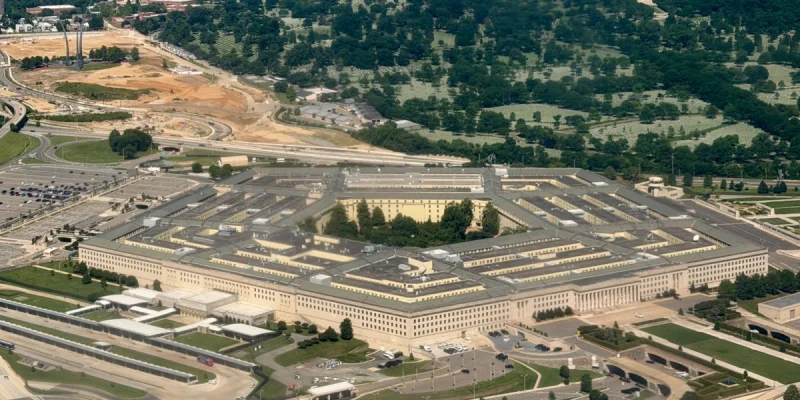
The Pentagon on Monday added BYD, Alibaba and Baidu to its updated 1260H list of companies it says aid the People’s Liberation Army, a move that puts three of China’s biggest technology and industrial names under a sharper US national-security spotlight. The designation does not amount to a ban, but it can complicate ties with the US government and send a warning to investors.
The timing matters. The list was released less than a month after President Donald Trump met with Xi Jinping in Beijing, a summit that did not produce a meaningful easing in tensions over advanced technology, especially AI. On Monday, American depositary receipts in Alibaba fell 1% to $119.84 at 3:40 p.m. New York time, Baidu dropped 2.1% to $119.14 and BYD’s receipts fell 0.7%.
The Pentagon said the named entities qualify as Chinese military companies operating directly or indirectly in the United States based on their alleged activities providing commercial services, manufacturing, producing or exporting. BYD is China’s top electric-vehicle company, while Alibaba and Baidu are among the country’s best-known internet and artificial intelligence groups, making the latest update a broad signal that Washington’s scrutiny is no longer confined to a single industry or business model.

That broader reach is what gives the move its bite. The 1260H list is a roster the Defense Department has determined aids the Chinese military, and a designation can restrict a company’s ability to contract with the US military or receive research funding. It is also widely treated as a red flag for US investors and can foreshadow tougher trade action later, even if the label itself carries few immediate legal consequences.
Beijing pushed back quickly. Liu Pengyu, a spokesman for China’s embassy in Washington, said China urges the United States to immediately correct its wrong practices and provide a fair, just and non-discriminatory business environment for Chinese companies. The companies have repeatedly rejected US claims that they support the Chinese military, and the Pentagon’s latest move revives a fight that briefly surfaced in February, when a previous version of the list was posted and then withdrawn minutes later without explanation.
The updated roster also restored ChangXin Memory Technologies and Yangtze Memory Technologies, underscoring that the dispute extends far beyond one corporate group. Craig Singleton, a senior fellow at the Foundation for Defense of Democracies, called the republished list “a post-summit reality check” and said the Trump-Xi meeting “did not pause competition; it clarified where competition will continue.” The specific activities that led to the designations were not spelled out, leaving that central question open even as the list tightens pressure on some of China’s most visible companies.
