


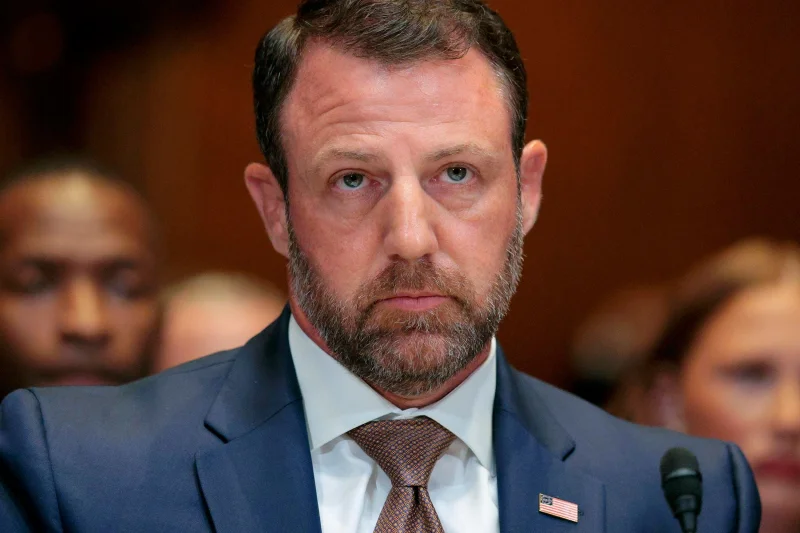
Homeland Security is drawing up plans to remove customs screening from international airports in Democratic-led sanctuary cities, even as Markwayne Mullin backed away from a threatened move against Newark Airport. The change leaves the White House-facing dispute over one airport unresolved but shows the broader plan is still alive.
The move is being watched now because Newark became the test case for a much bigger fight. Mullin had said last week that he would pull U.S. Customs and Border Protection officers from Newark International Airport and shut down customs screening there if local officials did not do more to protect Delaney Hall, the immigration detention facility tied to the protests. The travel industry reacted within hours, and that backlash is still hanging over the administration’s next step.
Mullin told reporters in Dallas on Friday that there was no need to remove customs officers from Newark after New Jersey increased state and local law support at Delaney Hall. New Jersey Democratic Gov. Mikie Sherrill responded that the shutdown threat was “completely ridiculous,” saying people trying to exercise their constitutional rights should still be able to do so even as threats surfaced to close Newark’s international terminal right before the FIFA World Cup. Her move to put state police on the front line and impose a mandatory overnight curfew made the airport dispute harder to dismiss as rhetoric.

But the Newark retreat did not end the underlying plan. A Department of Homeland Security spokesperson said the agency was “currently drawing up plans” for sanctuary cities, arguing that local “radical left Democrats” were not allowing federal officers to do their jobs and that international flights should not be processed into those cities either. The Department of Justice identified 18 sanctuary cities under President Donald Trump’s April 2025 executive order, including Newark, New York City, Los Angeles, Chicago, Boston, Seattle, San Francisco, Denver, Philadelphia and Portland, Oregon.
That is the friction point in this fight: Mullin says Newark no longer needs to be targeted, while DHS is still preparing a broader map of possible airport changes elsewhere. The White House has not approved the plan, and no implementation date has been made public, which means the administration is still deciding whether to turn a protest-driven threat in Newark into a policy that could touch airports across several major cities. The travel industry, which warned that pulling CBP officers would amount to a “severe, self-inflicted economic wound,” is likely to keep pressing that case as long as the plan stays on the table.
For now, Newark has been pulled back from the edge. The bigger question is which airport gets singled out next, and whether DHS is prepared to move from talk about sanctuary city airports to actual screening changes.
