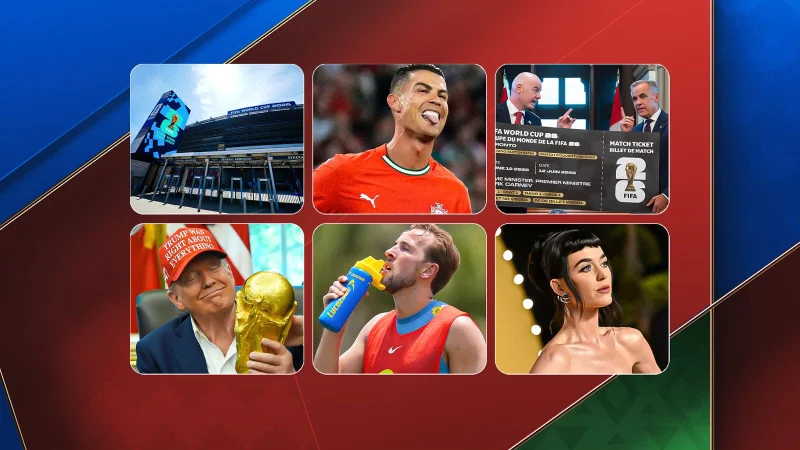
Gianni Infantino is about to preside over the biggest World Cup ever staged, one that will be spread across the United States, Mexico and Canada for the first time when the tournament opens in Mexico City on Thursday. The 2026 edition will be FIFA’s first pan-continental World Cup, with 48 teams and 104 matches, and the scale alone has turned it into something far larger than a sporting schedule.
The FIFA president has tried to sell that scale as a clean break from the past, describing it as “simply the greatest event that humanity, that mankind, has ever seen.” That is the pitch behind the world cup sweepstake generator searches now, as fans try to map a tournament that will be split across three countries and, unusually, around 75% of the games in the United States. For organizers, the next few days are about turning a sprawling idea into a live event.
The opening match at Estadio Azteca matters because it gives shape to a tournament that has no precedent. No previous World Cup has been spread across three countries, and none has involved as many as 48 teams and 104 matches. Mexico City’s historic stadium will become the first venue to host the start of three different World Cups, a detail that underlines both the weight of the occasion and the pressure on host nations to make the whole thing work.
But the tournament’s scale has also made it unusually vulnerable to the world around it. It has been described as the most politicised, the most expensive and potentially the hottest or most polluting World Cup ever, even as FIFA argues that a bigger field and wider reach make it more inclusive and more lucrative. In the United States and Mexico, high ticket costs have already caused concern, while in Mexico security worries are sharpened by major cartel violence this year, protests that have toppled World Cup player statues in Mexico City and threats from teachers to disrupt matches unless wage demands are met.
Iran has become the sharpest example of how quickly football can run into geopolitics. FIFA confirmed last month that the team moved its base from Arizona to Mexico, after the US and Israel attacked Iran in February and retaliatory strikes spread across the Middle East. A ceasefire took effect in early April, but strikes between the two sides have continued, and Donald Trump warned at one stage that it was not appropriate for Iran to participate for their own life and safety. Iran now look set for a fourth consecutive World Cup, yet its federation has accused the US of denying visas to some executives and backroom staff, and an Iranian official said the players had been told they must enter and leave the US on the same day of their three group matches there. Iran’s embassy in Turkey called it politically-biased interference in sport.
The contradiction at the heart of this World Cup is plain: FIFA is selling unity, but the event is arriving with conflicts, border disputes, visa fights and security questions already attached to it. If Infantino gets the spectacle he wants, the first test will not be the quality of the football but whether the host nations can keep the tournament moving across three borders without the politics swallowing the game.