



The families of the Nottingham attack victims said doctors should break confidentiality when a patient poses a danger to others, using a London news conference on Monday to press for a change in the way mental health and medical information is handled. Their demand came just after a 14-week public inquiry into the attacks concluded evidence in the capital.
For the relatives of Barnaby Webber, Grace O’Malley-Kumar and Ian Coates, the point is not theoretical. Valdo Calocane was convicted in January 2024 of three counts of manslaughter and given an indefinite hospital order after the early hours of 13 June 2023, when the three were killed in Nottingham. The inquiry has heard repeated failures around his care, policing and communication between agencies, and the families say those failures left the public exposed.
Sanjoy Kumar, Grace O’Malley-Kumar’s father, said the safety of society must come before the autonomy of a single patient. He said doctors are already given clear guidance to break confidentiality if they know someone may bring harm to another person, and said that did not happen in this case. His argument landed with particular force after the inquiry heard that Calocane had paranoid schizophrenia, had been sectioned four times before June 2023 starting in May 2020, and was discharged from mental health services months before the attacks because healthcare workers could not find him.
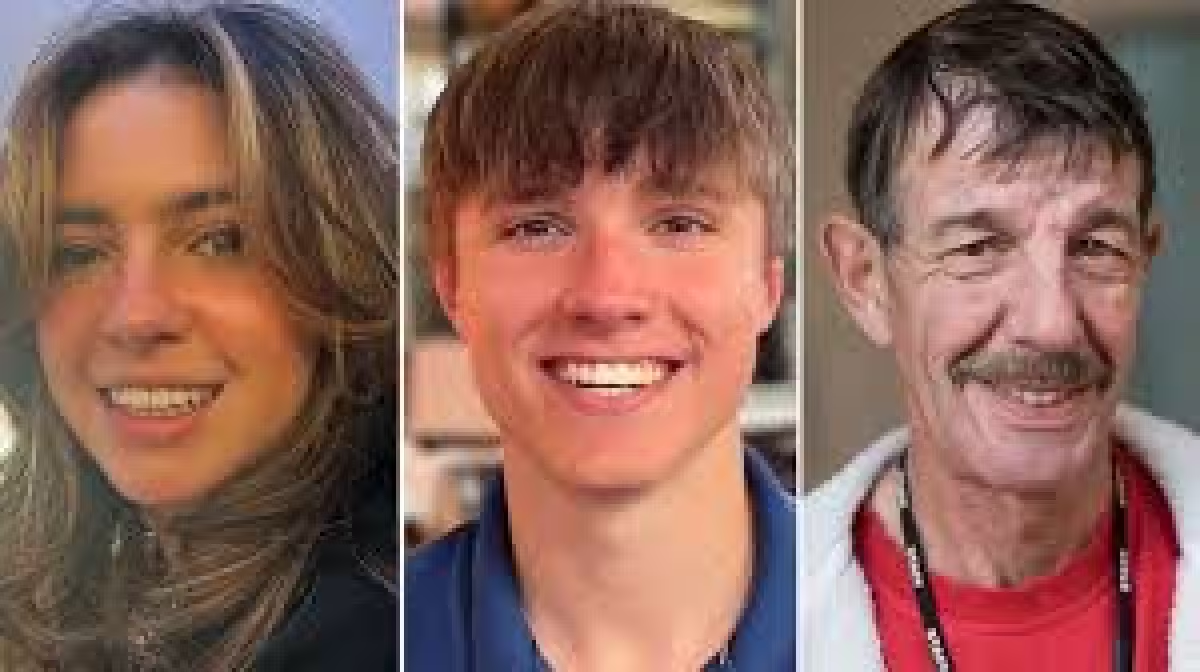
That failure to keep track of him sat alongside another thread the inquiry has now exposed: police did not act on an arrest warrant issued 10 months before the killings, and two forces apologised at the start of the hearing. The case has become a test of how far doctors, police and mental health teams are expected to go when a patient’s record points to danger but the systems around him keep missing the warning signs.
Celeste, Calocane’s mother, added a more complicated layer. She said she was not aware of decisions made about her son’s care until after the June 2023 attacks, and said he withdrew consent for details to be shared with her in December 2021 even though, in her view, he did not have the capacity to make that decision. That claim goes to the heart of the dispute now: whether confidentiality protected a vulnerable man, or whether it helped keep the people around him in the dark.
The inquiry was set up to examine what happened before the Nottingham attacks and how the response failed. What comes next is the harder question: whether ministers, regulators or health authorities will now rewrite the rules so clinicians can speak sooner when a patient appears to pose a threat.
