


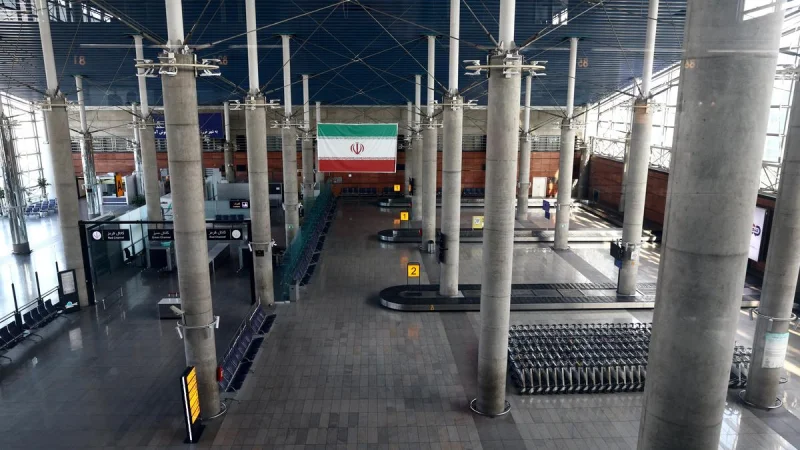
Iran closed airspace around Tehran’s Imam Khomeini International Airport on Monday, June 8, 2026, after an Israeli attack, disrupting access to the country’s main airfield as the confrontation with Israel widened again. Tehran also shut its western airspace after firing missiles at Israel, the first such escalation since a fragile ceasefire took effect in early April.
The timing matters because travelers, airlines and oil markets were already reacting to a day of fresh cross-border fire. Iran’s state broadcaster confirmed the missile launches, oil prices rose more than $2 a barrel and, on Sunday, Israel struck Beirut’s southern suburbs without warning while also launching renewed strikes on Lebanon despite a truce between the two countries.
That makes the airport closure more than a local aviation disruption. Tehran’s Imam Khomeini International Airport is Iran’s main airfield, and shutting the skies around it signals how exposed civilian transport has become as the conflict spreads across multiple fronts. The move came just as Donald Trump said in an interview published Sunday that Benjamin Netanyahu would have no choice but to accept whatever deal the United States negotiates with Iran, adding that he “calls the shots.”

The pressure does not stop at the runway. Iran’s ambassador to Moscow said Monday that the Strait of Hormuz will be open but under new conditions to be set by Iran and Oman, including a transit fee, even though the war has largely cut oil flows through the waterway. Before the conflict, one-fifth of the world’s oil passed through the strait, and now oil and liquefied natural gas flows remain severely constrained even as several tankers have recently managed to leave the Gulf.
That gap between declared openness and restricted traffic is the clearest sign of how damaged the route has become. Tehran is trying to project control over both airspace and shipping lanes, but the facts on the ground show a system still under strain, with no indication yet of how long the closure around the capital’s airport will last or when normal movement will resume.
The airport shutdown is the immediate story, but the larger picture is more unsettling: Iran is tightening its own airspace while trying to rewrite the terms of one of the world’s most important sea lanes, and neither move suggests the conflict is settling down.
