


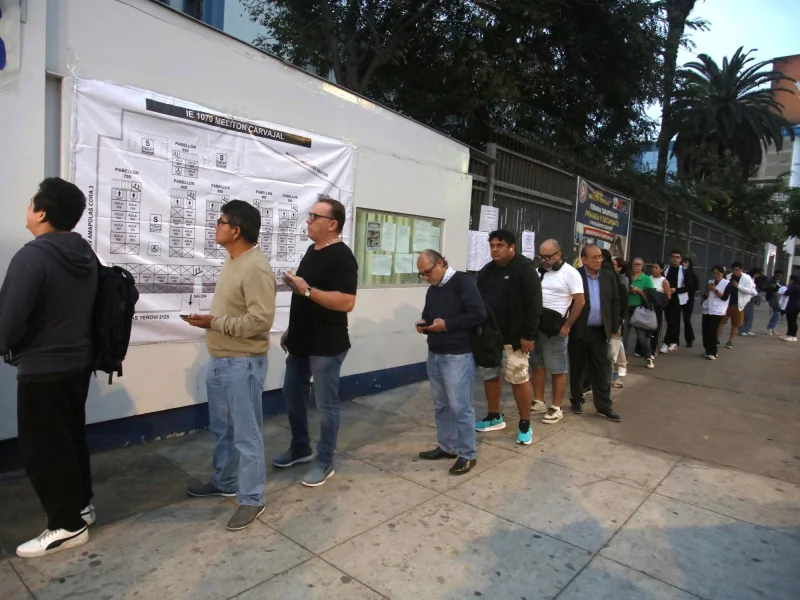
Peru opened its presidential runoff at 7:00 a.m. in Lima on Sunday, sending voters to the polls for a race that will choose the country’s president for the next five years. Keiko Fujimori, the right-wing candidate, and Roberto Sánchez, who leads the left, entered the day in a contest that began calmly, with no tumult or chaos reported as voting got underway.
The early scene fit a country that has grown used to tense elections, but it also gave way to something more ordinary: lines moving, ballots being cast, and a decision that will shape Peru’s politics through the end of the decade. Polling stations in Miraflores and Los Olivos reported fluid traffic in the morning, and the first quick-count indicators from Transparencia and Ipsos were due at 8:00 p.m. local time, with a reading expected to identify the winner with 99 percent certainty.
That timing matters because this runoff has been framed as a dead heat. The latest polls show the two candidates tied within the margin of error, and analysts say undecided voters could still tip the outcome. More than 1,200,000 Peruvians living abroad are also being treated as decisive, even though that vote has not been measured in the surveys that have kept the race so tight.

Fujimori is running on continuity: the free-market model, the 1993 Constitution and a hard-edged conservative security agenda. Sánchez, the leader of Juntos por el Perú and a former minister in Pedro Castillo’s cabinet, is pushing for a deep constitutional overhaul, greater state control over strategic resources and a review or cancellation of free trade agreements. The choice is sharpened by Peru’s recent political history, which includes Castillo’s removal after he attempted a coup d’état.
The family legacies around both candidates still hang over the vote. Fujimori has faced criticism tied to her family’s political history and her five years in Congress, while her father, Alberto Fujimori, died two years ago after being prosecuted for crimes against humanity and corruption. Sánchez, for his part, is trying to turn discontent into momentum by casting his campaign as the answer to voters outside Lima.
One young woman at a polling station in Lima said she would vote only to avoid the fine, a reminder of how obligation and conviction can pull in different directions on election day. For Peru, that split may matter as much as the slogans, because the country does not need a symbolic winner tonight; it needs a real one, and the answer is likely to begin emerging at 8:00 p.m. and settle only when official results arrive in mid-July.
