


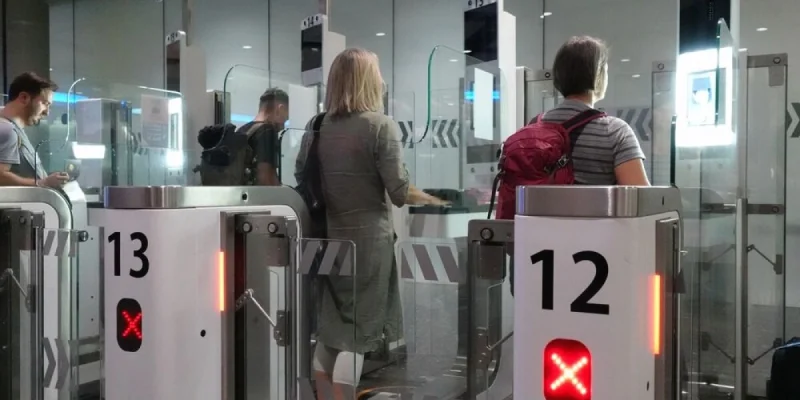
Travellers could be stuck in airport queues for up to six hours at some European airports this summer as the European Union’s new Entry/Exit System beds in, the airline industry’s main trade body warned on June 6. Rafael Schvartzman said the risk grows if staffing and technical problems are not fixed before the busiest weeks of the season.
The warning lands just as millions of people are moving through Europe for summer holidays, and it is already being searched by Britons heading to France as well as other non-EU travellers facing the new checks. IATA said a routine passport check that once took about 20 to 25 seconds can now take around 90 seconds under the system, enough to turn a normal line into a much slower one when airports are full.
The Entry/Exit System was introduced in April and replaces passport stamps with electronic records for non-EU travellers entering the Schengen area. Schvartzman said disruption was already being reported in Portugal, Spain, Italy, Greece, Belgium and elsewhere, and reports from Spain pointed to some of the longest delays at airports serving holiday destinations including Alicante and Lanzarote.

That matters because the slowdown is not evenly felt. Britons holding valid French residency cards are exempt from EES registration, but they may still find themselves caught in longer lines at ports and airports while other non-EU travellers are processed more slowly. The practical effect is that even people who do not need to register can still be delayed by the system around them.
Dover has already shown how quickly the new border checks can spill into holiday disruption. In May, French border police invoked an emergency provision there after queues stretched for several hours during the first major holiday weekend since the system came into force, and biometric registration was not yet fully operational because some equipment was still being installed. French officers were manually creating traveller records, while the Port of Dover had already warned that busy holiday periods could bring more disruption during the rollout.
IATA wants EU authorities to keep emergency flexibility measures beyond September, a sign that the industry does not expect the summer to pass without more strain. Schvartzman’s warning leaves one blunt question hanging over the peak travel weeks: whether the airports already running slow today can be staffed and equipped fast enough to stop three, four, five or six-hour queues from becoming the season’s defining image.
