


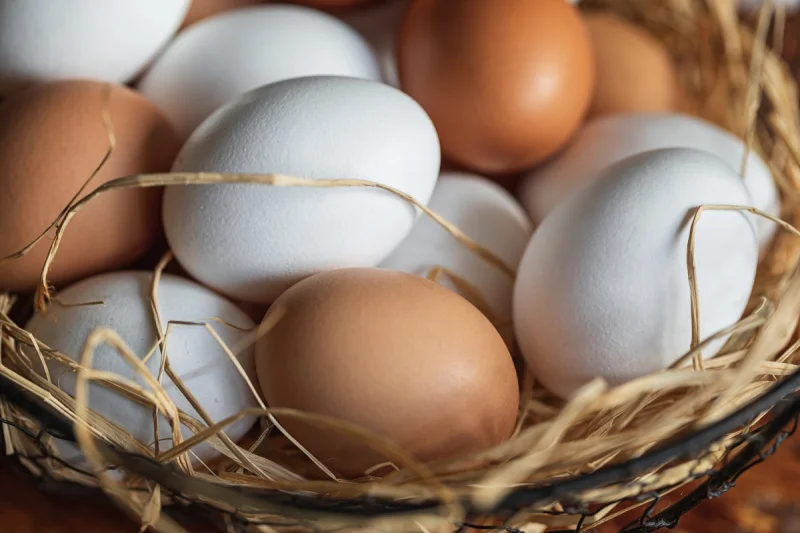
Sainsbury’s said this week it will stop selling brown eggs under its own-brand label and switch to white-shell eggs only, putting a quiet supermarket habit into the middle of a public argument about cost, quality and carbon.
The change matters now because it lands in a market where shell colour has long carried meaning. For half a century, British shoppers have paid extra for brown shells and orange yolks, even though white eggs were commonplace until the 1970s. Sainsbury’s is betting that the same eggs in a different shell can be sold as a cleaner choice rather than a lesser one.
The company says the white hens it uses are smaller and require less feed for the same egg output, which it says gives an over 12 per cent reduction in carbon emissions compared with brown hens. It gave the figure as 12.7 per cent. That turns what had been a visual preference into a climate calculation, and it puts one of Britain’s biggest grocers on record as choosing emissions over a familiar shelf image.
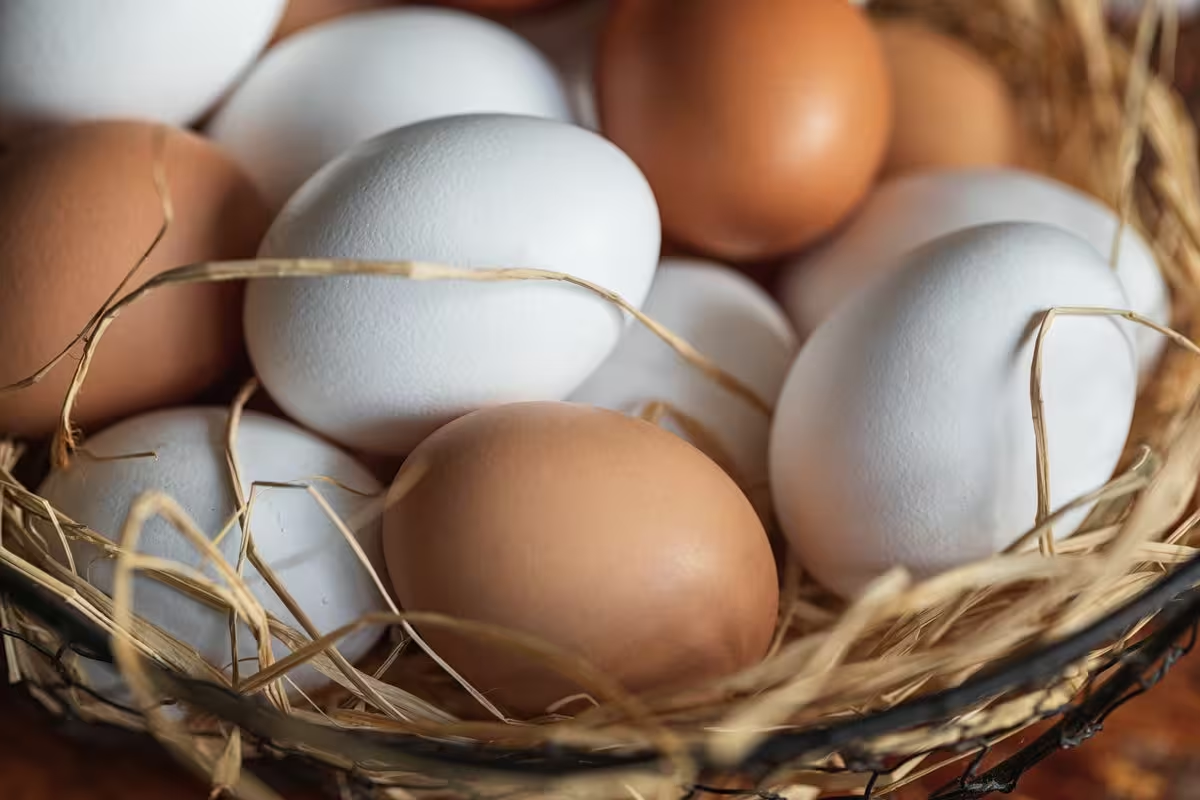
Hannah Twiggs, a specialist who has followed the debate around egg colour, said British shoppers have been paying extra for brown shells and orange yolks for half a century. That preference grew out of the belief that brown eggs were more natural and nutritious, while white eggs slipped out of favour after the 1970s. Britain eventually became an overwhelmingly brown-egg market, with nearly 90 per cent of all eggs sold carrying brown shells.
That shift was never really about the hen or the egg. The British Hen Welfare Trust has said there was a widespread misconception that white eggs had been bleached, while brown eggs came to be linked with traditional farming and superior quality. White egg-laying hens were also more common in intensive farming systems because their smaller size meant more birds could be housed in the same space. In the United States, by contrast, more than three-quarters of eggs sold are white.
The friction for Sainsbury’s is that many shoppers still read brown shells as a sign of better welfare, flavour and nutrition, even as the supermarket is selling the switch as an environmental improvement. That leaves the chain asking customers to accept that the egg they have trusted for decades may not be the greener one they assumed it was. A fuller account of the move is available in Sainsbury’s Drops Brown Eggs for White Eggs in Carbon Cut Move.
What happens next is whether shoppers buy the logic along with the carton. Sainsbury’s has set out the switch, but not the wider rollout beyond its own-brand line, and it is now testing whether a market built on brown shells will follow the numbers instead of the habit.
