


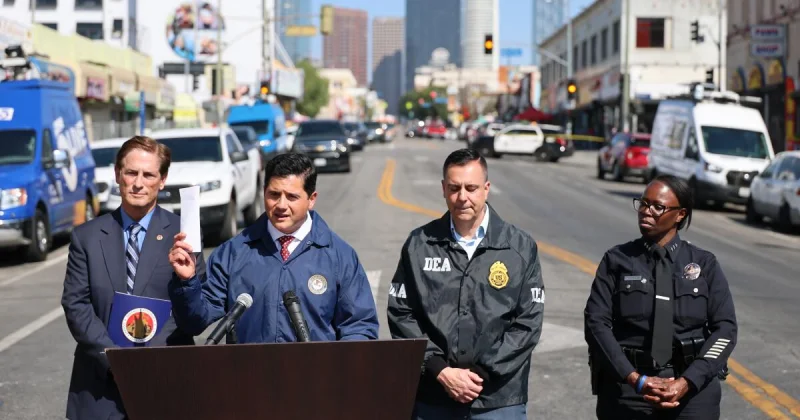
The Justice Department sent a federal prosecutor to Los Angeles this week to watch ballots being counted, days after Donald Trump accused Democrats of trying to steal California’s governor and mayoral races. The move put a federal eye on a process that is already under strain from the loudest fraud claims being aired about it.
That is why people are searching for the latest status of the federal investigation into California primary election fraud now: the complaint landed within a day of the polls closing in the state’s primary election, and the response came immediately after. For California voters, the timing matters because the count is still moving while the political fight is already in full blast, and the state’s slow pace has become part of the story.
The pace is not an accident. Every voter in California receives a mail-in ballot, a vast majority of voters cast by mail, and signatures on those ballots are checked both electronically and by human observers. Voters also get 22 days to cure ballot errors. Those layers of verification slow the count, but election officials and experts say they are there to protect against fraud and make sure eligible ballots are counted.

Paul Mitchell, a longtime election analyst, said he would rather wait to know who won than have a vote not count. “There’s not a lot of people I know who would say: ‘Nah, I would rather have known who won the race faster than have my vote count,’” he said, adding, “So what’s the rush? The focus should be making voting as easy as possible.” He also said, “The only people who complain about it are the people who lose,” and called the conspiracy talk around slow counting “really a conservative thing.”
Still, the delay has become a political liability. Prominent Democrats, including Gavin Newsom, are increasingly worried that the slow reporting of results is eroding public confidence. Last year, the state assembly cut the ballot-curing period from 26 to 22 days in an effort to speed things up without dropping the safeguards that make California’s count crawl after Election Day, which creates the biggest bottleneck.
The friction is plain: Trump’s cheating claims collide with a system built around redundant checks, voter fixes, and slower but more complete tallies. Lisa Bryant, an election law expert, said California is “very liberal on how much time they give people to cure those ballots,” and added that the state could tighten those timelines to speed results without giving up much. What the federal prosecutor was specifically sent to look for in Los Angeles, though, has not been disclosed, and that leaves the most important question unresolved: whether this review becomes a routine observation of a familiar count, or the opening move in something more serious.
