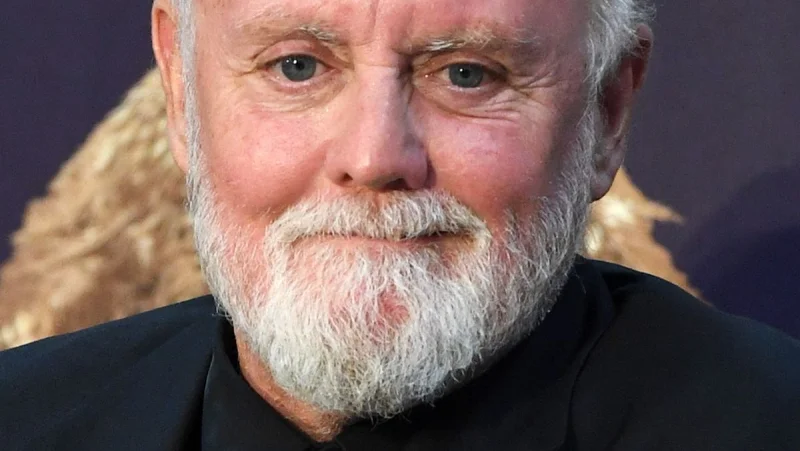
Roger Taylor says a man on Harley Street has cured the tinnitus that has shadowed him for decades, the latest change in a hearing problem he links to more than 40 years behind mega-volume stadium concerts. The 76-year-old drummer said the ringing used to be worst when he was tired or stressed, turning into what he described as “a million crickets” with clicks and clacks.
He made the comments on the podcast I’m ADHD! No You’re Not, where he and his wife, Sarina, were guests. The appearance has drawn attention because Taylor is not just talking about tinnitus. He and Sarina also discussed whether he may have ADHD, a topic that has become more public for the couple since her own late-life diagnosis.
Taylor framed the noise damage as the price of a career spent playing loud shows night after night. “It’s all those speakers and those drums banging,” he said, adding that after decades of it, “a man in Harley Street taught me how to deal with it.” He did not spell out what the treatment was, and that is the part listeners are likely to keep asking about.

What he did make clear is that not every therapy helps him the same way. Talking therapy, he said, “doesn’t help me at all,” while reiki and sound healing do. That distinction matters because it suggests Taylor has been searching for something practical rather than simply comforting, and that the treatment he found on Harley Street sits outside the usual conversation around tinnitus care.
The Queen drummer also used the podcast to revisit the band’s past and his bond with Freddie Mercury. Mercury, who died in 1991 from AIDS-related complications, was “kind of my best friend,” Taylor said, describing the pair as being “in a gang together” against the world. He added that Mercury understood Queen needed one another for the chemistry to work, a remark that again put the band’s internal balance at the center of its story.
There was a familiar bluntness to the way Taylor described himself inside that chemistry. “Don’t call me the leader. I’m the singer,” he said, a line that fits the long-running image of Queen as a group built on shared parts rather than a single frontman and his backing band. Even now, nearly 30 years after Mercury’s death, Taylor was still talking about that old arrangement as something essential.
For readers, the unanswered question is straightforward: what exactly did the Harley Street man do that Taylor says finally worked? Taylor has said the treatment helped, and he has also made plain that the ringing arrives hardest when he is worn down. But until he names the method, the most useful detail may be the narrow one he has already given — that after decades of noise, he has found something that he believes lets him live with, and perhaps beyond, tinnitus.