


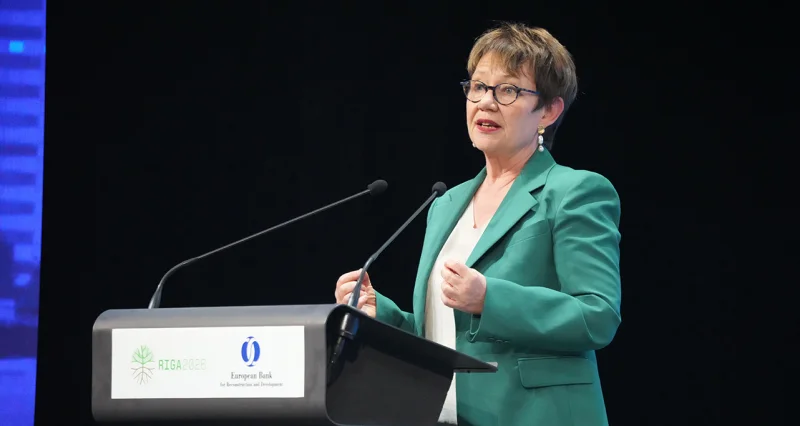
Egypt pressed multilateral development banks on Saturday to move faster and with more flexibility as Middle East conflicts ripple through trade, supply chains, commodity markets and energy. Badr Abdelatty made the appeal at the European Bank for Reconstruction and Development’s 35th Annual Meeting in Latvia, saying the region’s economic shock is spreading far beyond the battlefield.
Abdelatty’s message landed at a moment when African and developing countries are already being squeezed by mounting debt, higher borrowing costs and thinner access to concessional funding. That pressure has made every delayed loan and every slow disbursement harder to absorb, especially for countries trying to keep food and energy bills under control while global financing tightens.
The Egyptian foreign minister welcomed the EBRD’s conflict response initiative for the Middle East and said the bank was preparing an Eastern Mediterranean crisis package. He also said Egypt is taking a proactive approach to secure energy needs, strengthen food security and preserve financial stability, while backing the continued rollout of a 2024-2027 European Union financial support package for Egypt confirmed in talks with EU Commissioner Valdis Dombrovskis.
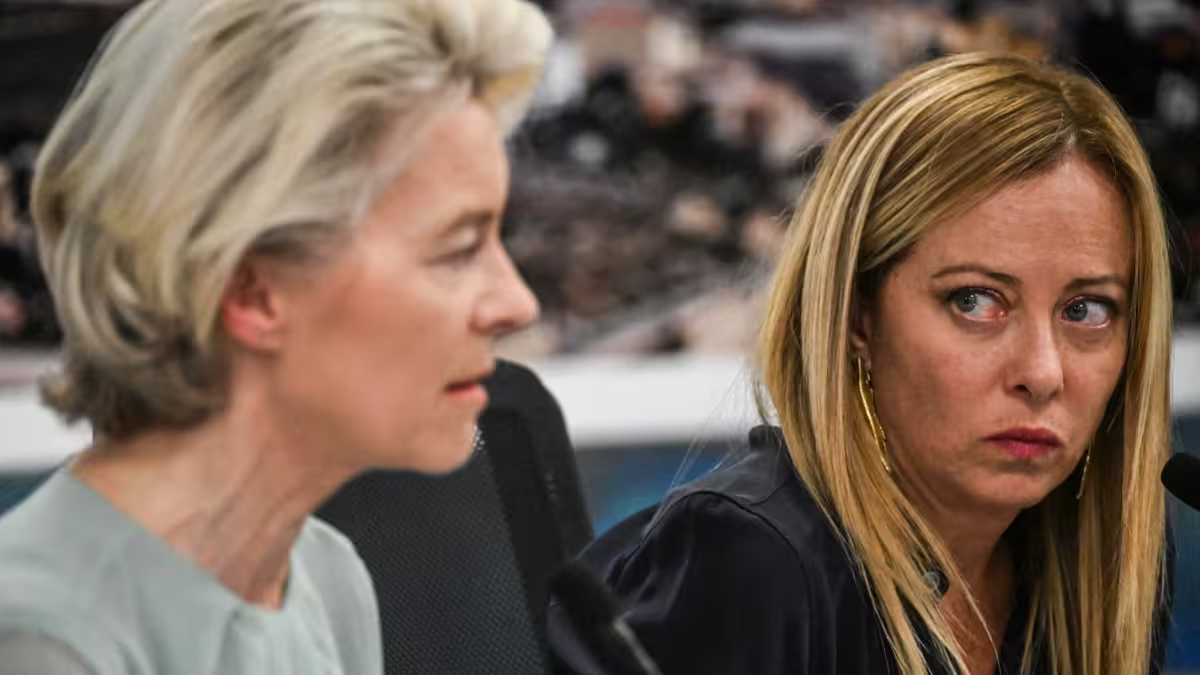
That support, however, is only part of the picture. Abdelatty and Dombrovskis also discussed how regional escalation is lifting global transport and insurance costs, a reminder that the fallout from conflict is not confined to the Middle East. Dombrovskis praised Egypt’s role in helping contain crises and support regional stability, while both sides agreed to deepen cooperation in renewable energy, the green economy, digital transformation, food security and infrastructure.
Abdelatty met separately with EBRD President Odile Renaud-Basso and EBRD Vice President for Banking Matteo Patrone to push for broader EBRD operations in the Egyptian market. He pointed to opportunities in renewable energy, artificial intelligence, information technology and electric vehicles, and said Egypt’s economic resilience rests on structural and monetary reforms, including a flexible exchange rate. Renaud-Basso, in turn, praised those measures for improving fiscal discipline, debt sustainability and the business environment for investment.
The trip also carried a bilateral track. Abdelatty met Latvian Foreign Minister Baiba Braže and congratulated her on her reappointment after Latvia formed a new government. The two discussed a proposed Egyptian-Latvian business council meant to boost trade, encourage digital and technology investment and open the door to African cooperation by using Egypt as a regional hub. For Cairo, the immediate ask in Latvia was clear: move the money faster, before the costs of delay rise any further.
