


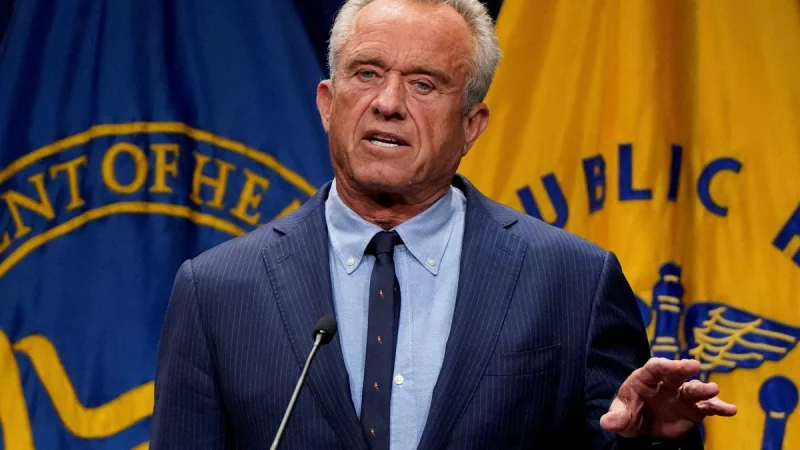
U.S. health secretary Robert F. Kennedy Jr. is seeking federal access to the medical records of most Americans as part of his push to study vaccines and autism. The records would come from state-run health information systems that let hospitals and clinics exchange detailed, identifiable patient data.
The effort matters now because federal officials have been meeting with leaders of those systems over the past year, and the request could open a view into doctors’ notes, prescription histories and other sensitive details held in the files of millions of patients. Kennedy has said the records are central to his work on autism, vaccine safety and chronic disease, even as the medical establishment has studied a vaccine-autism connection for decades and rejects it.
Craig Behm, who runs the Maryland health information exchange, said Kennedy’s team asked how the medical records his exchange stores from hospitals and health systems could be used to study vaccines. That exchange is one of the little-known state systems now at the center of the push. Federal officials have met several times over the past year with leaders of those systems and asked how the personal medical records they maintain could be used for vaccine research.
Kennedy has portrayed the move as a practical fix for what he calls a broken system. In a May interview, he said he and his team had gone to the states for cooperation and that databases had been assembled so studies could begin. “We have a whole pipeline of studies that will be done over the next year,” he said in May. His political appointees and allies have led the initiative inside the health department, including William “Reyn” Archer III, a former Texas health official and vaccine critic whom Kennedy hired as a senior adviser.
But the push has also met quiet resistance. Some public health leaders have objected in private meetings to giving Kennedy’s team access to the data, raising doubts that the request would be legal or that it would even be useful. HHS has not said how it will protect or handle the personal health information it seeks, leaving unanswered how far the federal government could peer into the minutiae of Americans’ medical records if the effort moves ahead.
Kennedy’s interest in the data is not new. He faced blowback last year when he proposed compiling the medical records of people with autism to create a federal disease registry, and health department officials later disputed that such a registry was underway. This year, however, the request has moved through state systems while millions of dollars in grant money has flowed into a Nebraska nonprofit that has assisted his effort. HHS has not publicly announced any new projects involving medical records and autism or vaccine research, even as President Donald Trump last week signed an executive order calling for the U.S. to reduce the number of vaccines recommended for children. The unanswered question is not whether Kennedy wants the records; it is how, and under what legal authority, his department intends to use them.
