


A new study says Stonehenge’s altar stone probably was not carried south by glacier ice from north-east Scotland, trimming one of the most elusive explanations for how the 6-tonne monolith reached southern England. Researchers say the glacier idea is still possible, but only if a highly unlikely chain of events lined up just right.
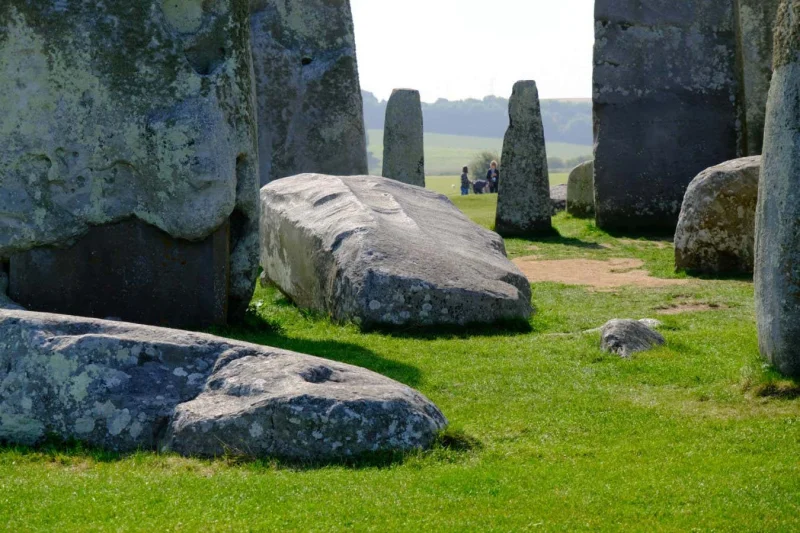
People keep asking because the stone’s path is so unusual. The altar stone sits at the centre of Stonehenge, is 5 metres long, partly buried and covered by two other stones, and has been in place for about 4,500 years. In 2024, researchers including Anthony Clarke traced its chemical fingerprint to outcrops in the Orcadian basin, which overlays parts of north-east Scotland, meaning it had to travel about 750 kilometres to get to Wiltshire.
Clarke said the work started with geology, not guesswork. “The altar stone is a sandstone – you can imagine grains of sand at the beach that have been squished together,” he said. “We can get an age and the chemical composition for each of those grains and build up a fingerprint, which we can then forensically compare to other rocks throughout the UK and Ireland.” That fingerprint matched north-east Scotland last year, but matching a source is not the same as explaining the journey.
To test the glacier theory, the team used geological analysis and ice flow modelling to reconstruct how ice moved during the last glacial period. Most ice flows from north-east Scotland went north, not south. Some did head south and would have dropped rock at Dogger Bank, but that land bridge was inundated around 8,000 years ago, long before Stonehenge construction began around 5,000 years ago. Clarke said that leaves the glacier route dependent on an “increasingly elaborate set of circumstances.”
The finding matters because it narrows the choices. Clarke and his colleagues had originally thought the stone was most likely moved by boat, and the latest analysis makes human transport look more plausible again. That is not a small leap of imagination: other stones at Stonehenge weigh 25 to 30 tonnes, and they were carried tens of kilometres by people, showing the builders already managed heavy loads on a large scale.
What remains unknown is the exact outcrop or quarry in north-east Scotland where the altar stone was taken from. Clarke said more sampling could eventually pinpoint it, but for now the stone’s first home is still only narrowed, not named. The altar stone has been staring out from the centre of Stonehenge for millennia; the next step is to work out where its journey truly began.
