


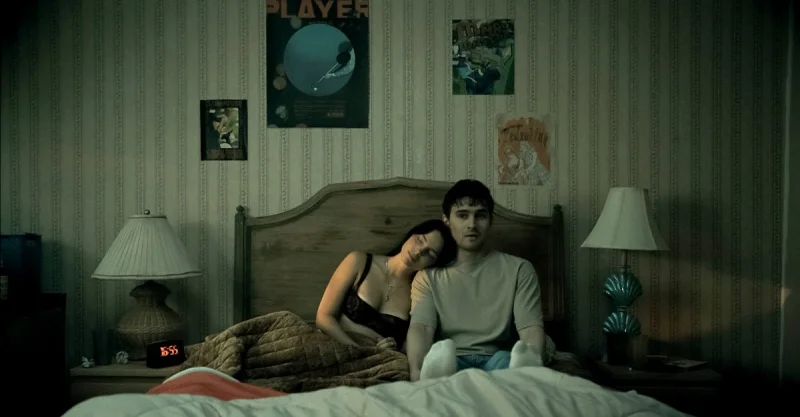
Curry Barker’s debut feature, Obsession, takes the ordinary terror of asking someone out and turns it into a nightmare with teeth. In the hit horror movie, Bear, a 20-something record-store employee played by Michael Johnston, cannot bring himself to ask out his co-worker Nikki — so he snaps a magical tchotchke called a One Wish Willow in half and hopes she will love him more than anything in the world.
That wish detonates the story. Nikki becomes a woman possessed by jealousy and starts stalking Bear with a level of devotion that is less romance than captivity: she duct-tapes his front door shut, hides flesh from his dead cat in his sandwiches and watches him sleep from dark corners of the room. The movie’s power comes from how quickly a private crush becomes public catastrophe, and why that lands so cleanly with viewers searching for obsession 2026 now.
Barker, 26, stages the whole thing as a Gen Z anxiety spiral, and that is what gives Obsession its charge. The film is about what happens when someone would rather reach for a magical shortcut than risk a real conversation. It mirrors a generation that has been scrutinized for its supposed aversion to dating, sex and human connection, and for the way even a small question — asking a friend why they ghosted you, for instance — can feel like a crisis. In that world, confrontation is not just awkward. It is an ordeal people try to outrun.
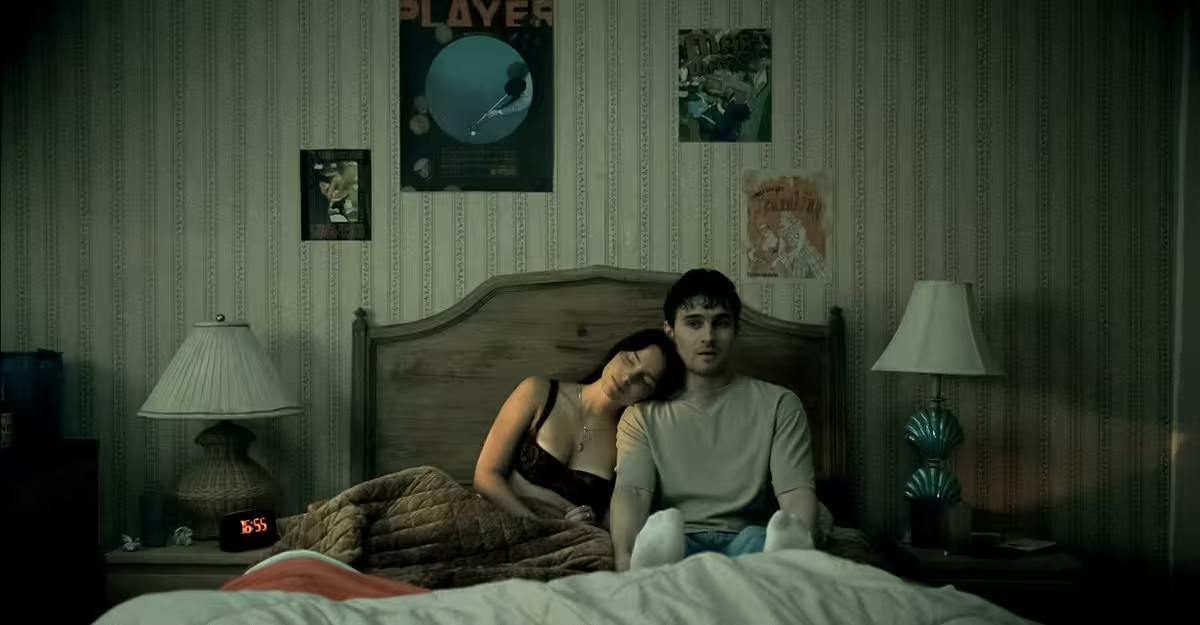
Bear’s trap is made worse by the fact that he is not the only one frozen by feeling. Sarah, played by Megan Lawless, is another co-worker who is about to tell him that she actually likes him, and the two wind up sitting together in Sarah’s car to avoid Nikki. It is a small scene, but it sharpens the film’s central idea: everyone keeps sidestepping the thing they most need to say, and the cost of that avoidance keeps rising.
There is also a harder reading hanging over the movie. Nikki’s behavior can be seen as an allegory for intimate-partner abuse, and the material is dark enough to support that interpretation. But Barker does not seem especially interested in pushing the film that direction. What he returns to, again and again, is the social fear beneath the horror — the panic of being known, the embarrassment of wanting someone first, and the desperate hope that a quick fix can replace the mess of real human friction.
That is why Obsession works as more than a gag about a bad wish gone wrong. It lands as a portrait of how a generation raised on avoidance can imagine love itself as a threat, and the film’s last unease is simple: once Bear is trapped in Nikki’s obsession, the only thing scarier than her devotion is the possibility that honesty would have changed nothing at all.
