



A new three-episode miniseries is putting Rachel Nickell’s murder back in front of viewers, but it does so from a narrower, more intimate angle than most retellings. The Witness follows the family left behind — especially André, who had to become a single parent overnight while grieving, raising a traumatised young boy and living with the police investigation.
That focus is why the drama is landing now. Nickell was stabbed 49 times while walking on Wimbledon Common during the day with her two-year-old son, Alex, in 1992, and Alex was the only witness to the attack. The killer remained at large for years, turning the case into one of the most studied and revisited murders in modern British crime history.
Here, though, the story is not driven by the hunt for the killer or by police procedure. André is played by Jordan Bolger, while the boy Alex is portrayed by Jahsaiah Williams and later by Max Fincham as the older child. The drama’s interest is in what that period did to the people closest to Nickell: the shock of the killing, the strain of a home remade by loss, and the long shadow cast by a witness who was far too young to understand what he had seen.
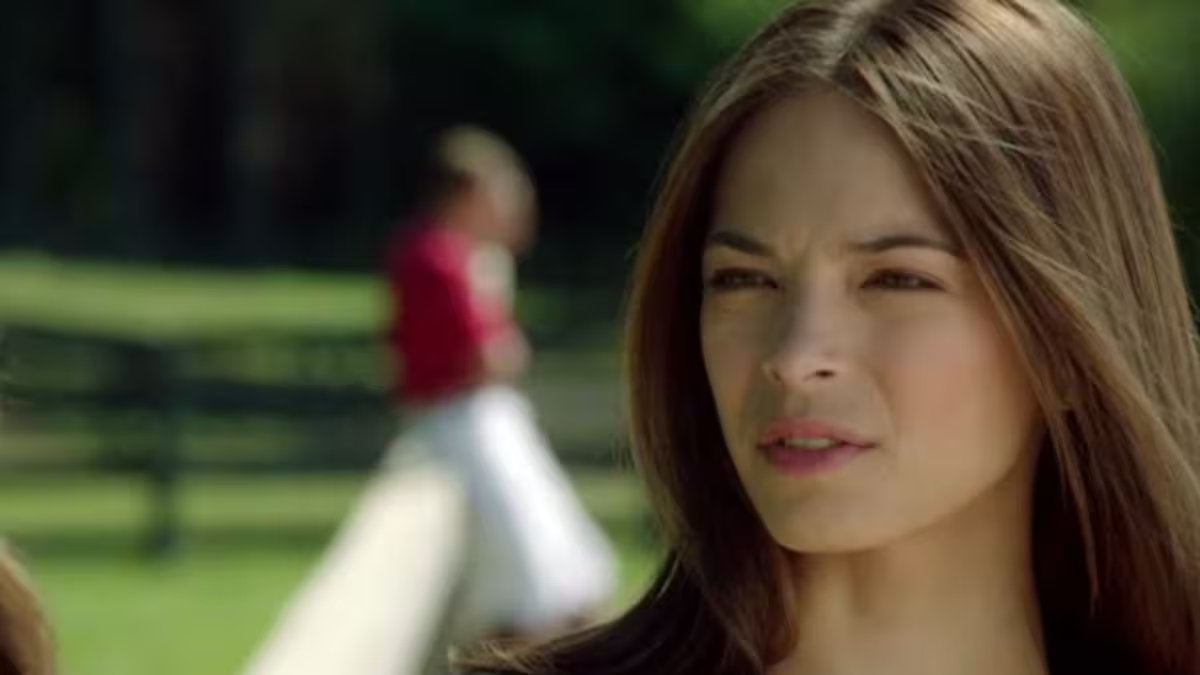
It also pulls no punches about the pressure around the family. Reporters and paparazzi camped outside André’s mother’s house, rifled through the bins and stole the post, while the review of the miniseries describes the press as intrusive and aggressive around the family, at the home, the police station and the crime scene. That matters because it shows how the aftermath became its own ordeal, one that kept intruding on grief rather than allowing it to settle.
There is, however, a quiet fracture running through the drama’s family story. Alex does not want to address the past, while André clearly knows that cannot last forever. The Witness also shows Alex as a teenager, which sharpens the unanswered question at its centre: how much did he understand as that preschool child on Wimbledon Common, and what happens when a family is forced to live with a memory that one member can only partly name?
The case has been analysed and dramatised before, but this miniseries makes its case by staying with the people who had to carry the aftermath. It does not offer closure. It offers the harder truth that, for André, the past is not past at all.
