


The Justice Department told a federal appeals court on Friday that the Trump administration’s ballroom project cannot be stopped by judges once demolition has begun, pressing an argument that would make the timing of a lawsuit decisive even before the merits are reached.
Patricia Millett, one of the judges on the panel, tested that logic with a blunt hypothetical. “What if Trump bulldozes the Statue of Liberty before anyone has a chance to sue and stop him? ‘Nothing can be done?’” she asked. The government’s lawyer, Yaakov Roth, answered, “I think that’s right, yes,” and later said the only thing that could halt the work would be Congress.
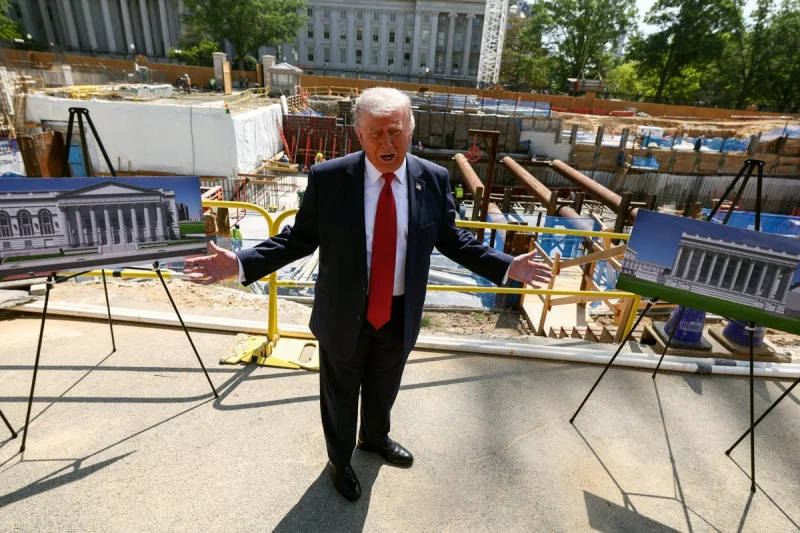
The hearing matters because the administration is trying to keep construction alive on a $400 million ballroom on the White House grounds while challengers, including the National Trust for Historic Preservation, try to stop it. The appeals court had temporarily allowed work to continue after a lower-court injunction stalled the project, and now the panel of Millett, Brad Garcia and Neomi Rao is deciding whether that block should stay in place.

The Justice Department’s position went further than a simple timing argument. Roth said the lawsuit came too late because the project had already entered the demolition phase, and he argued that nobody had grounds to sue merely because they do not like how the project looks. He also told the judges it would have been too late for anyone to intervene even on day one of demolition.
That claim sits awkwardly beside a March ruling by U.S. District Judge Richard Leon, who said there is no law that “comes close” to giving Trump the authority to build on the property without congressional approval. Leon also ruled that any new construction requires congressional approval, regardless of whether the president plans to use private or public dollars to fund the ballroom. The challengers have leaned on that ruling as they ask the appeals court to keep the project blocked.
The administration has tried to widen the project’s description in court filings, saying the ballroom is not the primary purpose and that it is also building a sprawling underground bunker with military installations on the site. Leon has not stopped work on the bunker, and the National Trust for Historic Preservation never objected to that part of the project. That split has become one of the oddities of the case: one piece of the project is frozen in litigation, while another moves ahead.
The broader fight is now about where the power lies when construction starts first and litigation follows. The government says courts cannot stop the project once demolition has begun. The challengers say Congress must approve the new construction and that the law does not let the White House outrun review by moving a bulldozer onto the grounds first. The panel’s decision will determine whether the administration keeps building or is forced back under the existing block while the case continues.
