


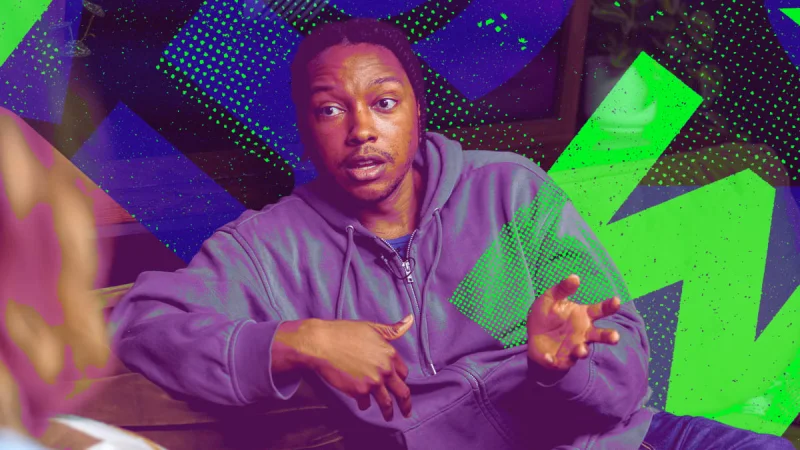
Josh Johnson is trying to separate what the internet gives him from what it takes. In a recent Mashable interview, the 36-year-old comedian said he is still looking for the good parts of the web while his own stand-up keeps moving through the same feeds that reward speed, outrage and clipping.
That search matters now because Johnson’s clips are already part of the internet’s daily churn. His stand-up regularly racks up millions of views across TikTok, Instagram and YouTube, which has made him a familiar face to people who may never have seen a full set. For a comic whose work travels so easily online, the question is not whether the internet is useful. It is what kind of internet he wants to keep using.
Johnson also showed up for the interview in the image many viewers already associate with him: a gray hoodie. He said the hoodies started as a comfort thing and turned into a collection built over years from vintage and thrifted finds. Then fans began giving him hoodies too, including customized ones, tour-inspired versions and cashmere pieces. Johnson said he is “too scared to sweat in” the cashmere ones, and said the gray hoodie became part of the persona people recognize on sight.

That public image fits the way his comedy circulates. Johnson’s sets often spread in short clips, a format that can turn a careful joke into a mass audience before a full special is even in view. That kind of reach has helped make him a recognizable online comic, but it also places him inside a system he clearly views with suspicion. When asked whether the internet was a bad idea, he said, “It depends on the day,” then added that “incredible good and connection” have come from it.
He did not stop there. Johnson said there is “a level of cruelty online that’s very hard to pull off in person,” and argued that it is easier for people to be hateful behind a screen than “face-to-face, eye-to-eye.” He said that “back in the day, debate used to mean something,” but now “everybody is saying the most outrageous thing possible for the click,” with some people trying to get clipped instead of really argue. That is the friction running through his comments: the same platforms that help a comedian find an audience also reward the sharpest and ugliest version of attention.
Johnson has not said what specific steps he is taking to find or amplify the good parts of the internet, and that is the part left hanging. What is clear is that he knows the bargain. The web can carry a joke from a stage to millions of screens, but it can also flatten debate into a race for reaction. Johnson seems to be trying to live in both realities at once, and that may be the most honest answer a comic with his reach can give.
