


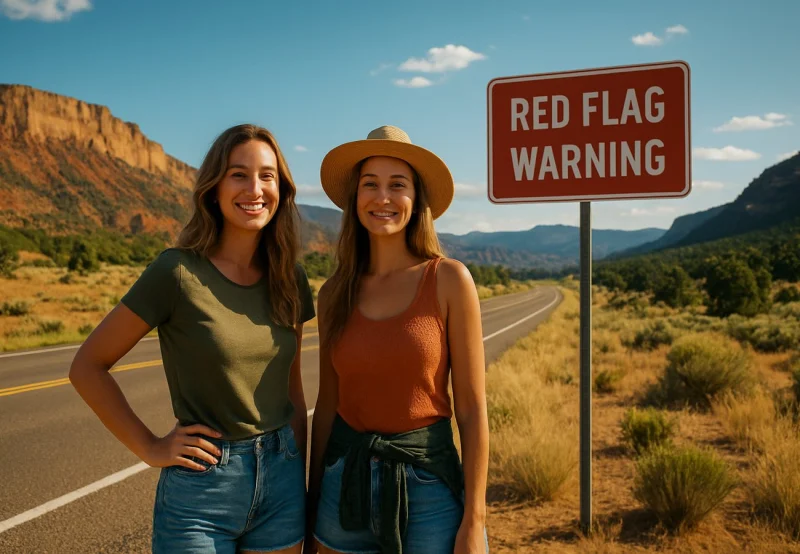
The National Weather Service activated Red Flag Warnings Thursday afternoon across at least five fire weather zones in western Colorado and eastern Utah, putting large stretches of the region on alert as hot, dry and windy conditions lined up for fast fire growth.
For travelers searching for a Fire Weather Watch now, the warning matters because it can change plans in real time. Campers, hikers and road trippers were already weighing route changes, and tourism operators in Moab, Aspen, Grand Junction and Park City were reporting visitor cancellations as smoke and fire danger complicated summer travel.
The zones included Colorado’s Little Snake and White River areas and Utah’s Eastern Uinta Basin and Book Cliffs. A Red Flag Warning is not a fire report. It is a predictive alert that says conditions are ideal for ignition and rapid spread, and under those conditions a spark can turn into a wildfire in minutes, not hours. Scorching temperatures, dangerously low humidity and gusty winds make campfires, barbecues, fireworks and spark-prone machinery potential ignition hazards.
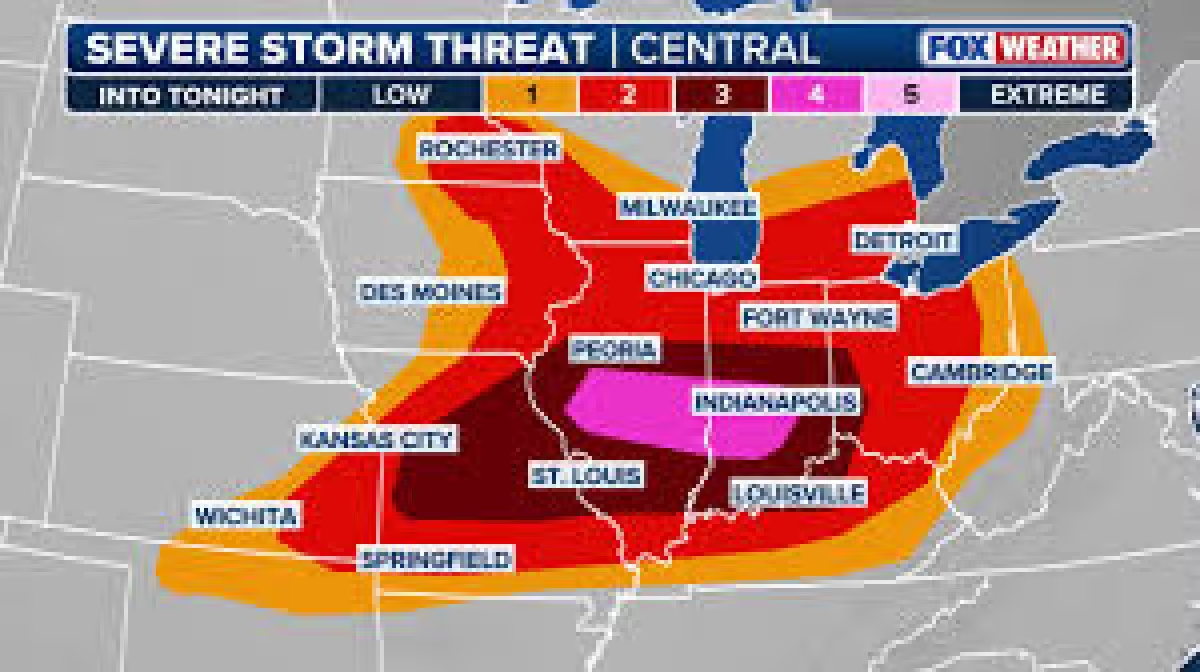
That distinction matters because the danger does not stop at the edge of the fire zone. Smoke plumes from active fires downwind can degrade air quality across entire regions, and wildfire smoke can affect respiratory health hundreds of miles from the actual fire, including places about 200 miles away. That is why trips are getting canceled even where no flames are visible. The problem is not just what is burning; it is what the air looks and feels like far from the burn scar.
The warnings land in peak wildfire season, when Colorado and Utah are already dealing with longer fire seasons that begin earlier in spring and stretch deep into late summer. Record-high temperatures, prolonged drought and massive fuel loads have erased some of the traditional safe windows for outdoor recreation, forcing travelers, campers, hikers and road trippers to plan around both fire danger and air quality.
What remains unanswered is how long the alerts will stay in place. For now, the message from forecasters is simple: in these zones, the weather is already set up for a fire to start and spread quickly, and anyone heading outdoors will need to treat the day as one where a small mistake can become the whole story.
