The World Meteorological Organization warned on Tuesday that El Niño has an 80% chance of forming before September, putting the planet on watch for a return of the ocean-atmosphere pattern that can reshape weather across continents. It said the chance rises to 90% before November.
That warning lands now because the world is already running hot. The WMO said unusually high temperatures are forecast in nearly all parts of the planet over the next three months, alongside a greater probability of extreme rain and drought. For farmers, the timing is brutal: a fresh El Niño could mean a shift in planting decisions, water availability and harvest losses just as many regions are heading into a season of climate stress.
El Niño is a cyclical phenomenon that recurs every few years and typically lasts around nine to 12 months. Scientists usually associate it with heavier rain in parts of South America, the southern US, the Horn of Africa and central Asia, while Central America, northern South America, the Caribbean, Australia, Indonesia and parts of south Asia often see drier conditions. The warm waters can also fuel hurricanes in the central and eastern Pacific while making them less likely in the Atlantic basin.
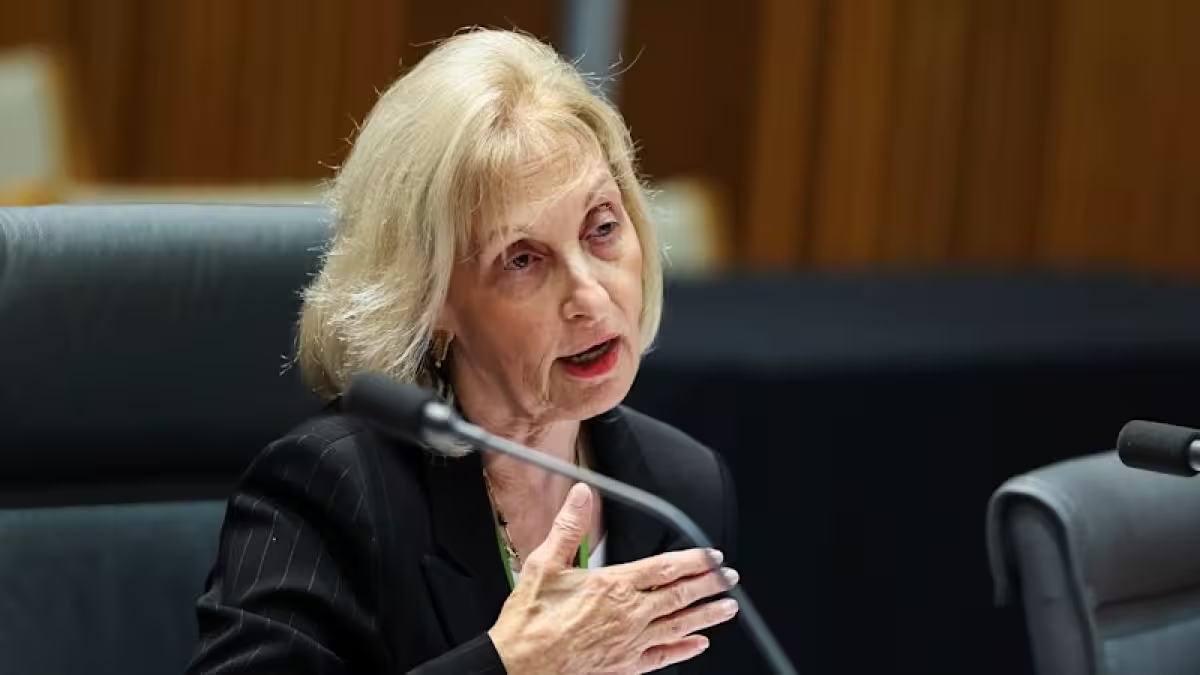
The WMO said sea surface temperatures in parts of the Pacific were approaching El Niño thresholds in late April to mid-May, fed by unusually warm subsurface conditions, and that the atmospheric pattern was also lining up with development. Even so, forecasters remain in a window of uncertainty. Most models point to at least a moderate event and possibly a strong one, but WMO chief Celeste Saulo noted that the spread is large and some models show no sign of a strong El Niño at all.
That gap matters because the last El Niño, in 2023-24, was one of the five strongest on record and helped drive a scorchingly hot 2024 that broke global temperature records. Gareth Redmond-King said the havoc from another likely hot year, possibly in 2027, would be devastating for many farmers and could be a matter of life or death for far too many people. The WMO is already looking beyond formation itself: the next confirmed milestone is whether the event shows up before September or, if not, before November.
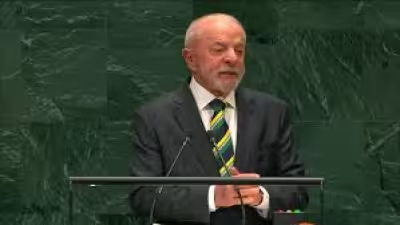
Guterres framed the risk in even starker terms, saying the world must treat El Niño as an urgent climate warning and warning that it will pour fuel on the fire of a warming world, with impacts that travel farther and cross borders faster. For now, the forecast is not for a super El Niño, which the WMO rejects, but for a return that could deepen heat, drought and flood risk across a planet that has little margin left.