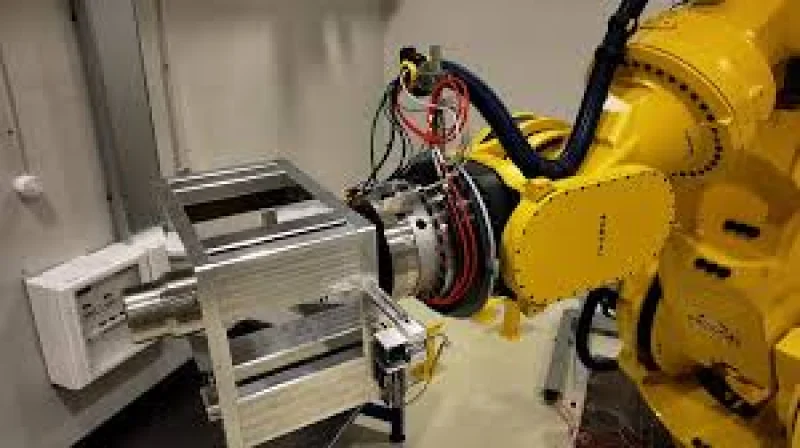
ITER is turning to specialized robots, machine vision systems and force-sensing technologies to assemble and eventually maintain the inside of its tokamak, where giant mechanical arms are already being developed to move multi-tonne parts into place. Raphael Hery, speaking in April at a dedicated session of the third ITER Public-Private Fusion Workshop, said, “We are preparing for the future while we are building this machine.”
The push matters now because ITER is moving toward the in-vessel component installation phase, the point at which the project’s remote-handling plans have to become working hardware. The components were designed from the start for remote installation, and that design choice is no longer theoretical: in a machine built for fusion power, direct human access inside the vacuum vessel will eventually be impractical during high-power operations because of radiation levels.
That is why ITER’s engineers are leaning on a mix of long, snake-like manipulators and larger robotic arms that can reach deep into the vessel through narrow ports. The task is not simply to move heavy objects. It is to guide them through openings, transport them around one of the most constrained industrial environments ever constructed and place them with extreme precision. Blanket manifolds can rise as high as 7.5 metres, blanket shield blocks can weigh up to 4 tonnes and divertor cassettes can reach 9 tonnes.
The scale of those parts explains why robotics is being treated as essential infrastructure rather than an experimental add-on. ITER has to install hardware that is too large and too heavy for conventional manual work, then later return to it for maintenance under conditions that will rule out direct access. The machine vision and force-sensing systems are meant to give operators the feedback they need when a component has to be nudged into position by fractions of a degree, not inches.
What remains unresolved is which specific robotic systems ITER will deploy next for in-vessel assembly and how fast they will be put to work. For now, the project is making one thing clear: it expects the robots to build the machine that will one day have to service itself.