


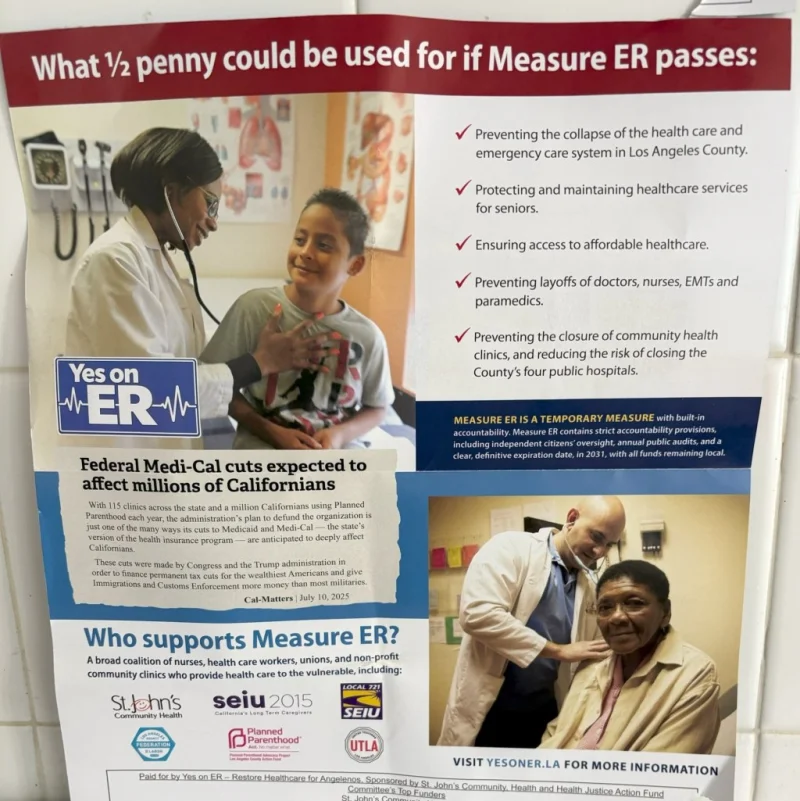
Los Angeles County voters were set to decide Measure ER on the June 2 primary ballot, a half-cent sales tax increase that would last five years and could bring in roughly $1 billion a year for health care and other essential services. The vote came as county clinics were already shutting their doors and supporters warned that more patients would be pushed into emergency rooms.
At a clinic in the county, Jim Mangia said the cuts already visible around him were not theoretical. He said federal health cuts, tied to the Big Beautiful Bill and President Trump, were having devastating effects on Angelenos, with many losing health insurance and clinics closing around them. He said the county was seeing the start of a public health crisis.
That urgency is why Measure ER landed on ballots now. Supporters said six of the county’s 13 health clinics had already closed after CDC and HHS grant money disappeared, leaving fewer places for low-income patients to go for routine care. They argued the tax increase would help shore up healthcare before the damage spreads further, especially if emergency rooms have to absorb more of the load when clinics are gone and patients cannot get appointments or coverage.
Holly Mitchell backed the measure and said the federal government had abandoned the county, adding that the state also offered no relief in its May revise. She and other supporters framed Measure ER as a stopgap for a system under strain, even though the money collected would go into the county’s general fund rather than a separate locked account for clinics alone.
Kathryn Barger pushed back hard on that pitch. She opposed increasing taxes on county residents and said the plan would make Lancaster and Palmdale among the highest taxed cities in the nation. Barger argued the crisis was broader than Los Angeles County and said the real answer was a system-wide fix, not piecemeal county action, because people would still come into L.A. County to seek care.
The choice for voters was blunt: accept a temporary tax increase in hopes of preserving access to care, or reject it and risk more closures, more crowded emergency rooms and a deeper squeeze on patients already losing coverage. What Measure ER would mean next depends on how 5.8 million registered voters marked their ballots in the June 2 primary election.
