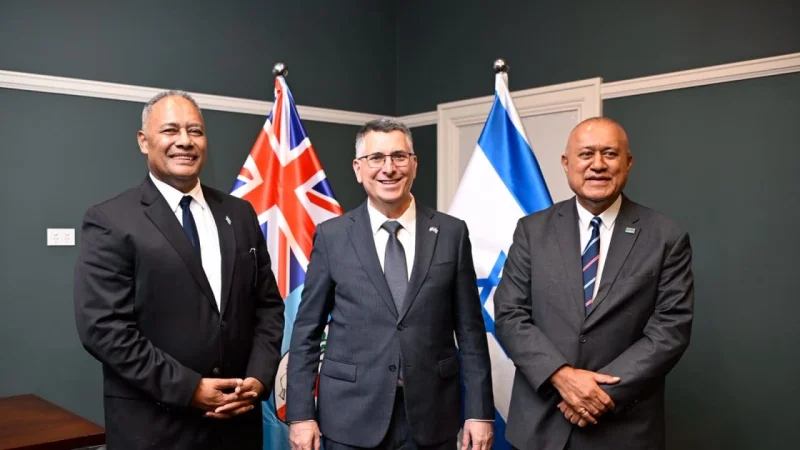
Israel opened its embassy in Suva on Friday, marking a new diplomatic presence in Fiji as Foreign Minister Gideon Sa'ar arrived for the ceremony. The opening came with a formal welcome, meetings at the top of government and two new cooperation agreements signed during the visit.
For Fiji, the timing mattered because the embassy opening was not a stand-alone gesture. It followed nine months after Fiji opened its own embassy in Jerusalem, and Sa'ar said the move showed the two countries were deepening ties in a way meant to last. In a post on X, he called Prime Minister Sitiveni Rabuka a dear friend of Israel and the Jewish people and a visionary leader, and said the mutual decision to elevate relations reflects a commitment to strengthen their friendship for future generations.
Sa'ar landed in Fiji ahead of the opening and was received in an ancient traditional ceremony in the presence of Rabuka, a reception reserved for heads of state and high-ranking guests. The ceremony included a prayer for Israel and drew diplomats, military personnel and senior officials. Sa'ar then met President Naiqama Lalabalavu, Rabuka, Foreign Minister Sakiasi Ditoka and several other cabinet ministers before the two sides signed a declaration of intent on national security cooperation and an agreement for cooperation in diplomatic training.
Rabuka used the joint press conference to cast the moment in sweeping terms, saying the opening was the beginning of a golden age between the two countries and that the relationship was dynamic rather than merely symbolic or historical. But he also stressed something more hard-edged: Israel has legitimate security concerns and a sovereign right to protect its citizens from terrorism and threats to its very existence. That balance mattered because the new friendship was being celebrated at the same time as both governments put security cooperation on paper.
The opening formalizes Israel's presence in Suva after 30 years of diplomatic ties, and it gives the new agreements a political backdrop that is unusually warm. What remains unclear is when the security and training arrangements will start to take effect, but the message from both capitals was unmistakable: this was not just an opening ceremony, it was a reset in public view.