


Voters in Iowa went to the polls Tuesday in primary elections that will decide who carries the Republican and Democratic banners into November for governor and U.S. Senate, after Kim Reynolds and Joni Ernst both passed on third terms. The contests also opened up two congressional districts and sharpened the fight over one of the most closely watched states in the country.
For people searching Iowa election results today, the races matter because the winners will help determine who has a shot at seats that could matter far beyond Iowa. The state’s Senate and House contests are being watched for their potential to influence control of narrowly divided chambers, while the next governor could also shape the political terrain heading into the 2028 presidential race.
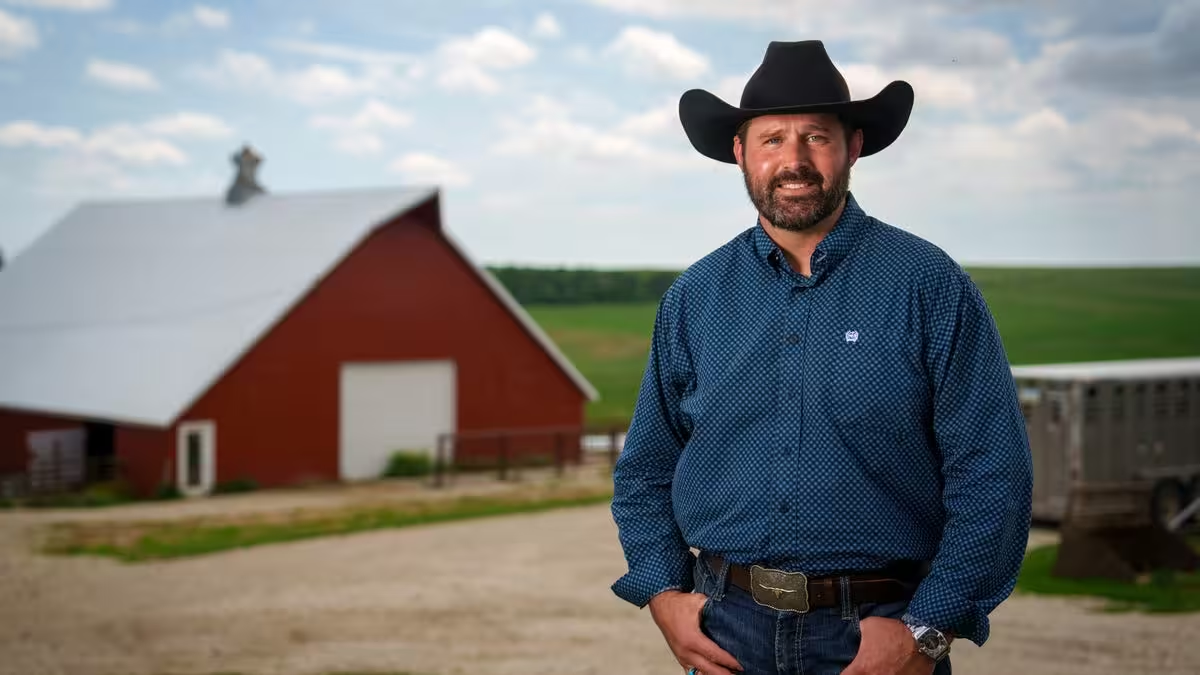
In the governor’s race, Republican voters are choosing among state Rep. Eddie Andrews, U.S. Rep. Randy Feenstra, entrepreneur and private school co-founder Zach Lahn, former state Rep. Brad Sherman and former state administrative services director Adam Steen. Feenstra has the endorsement of President Donald Trump, but his district is heavily Republican and is unlikely to play a major role in deciding which party controls the House. On the Democratic side, state Auditor Rob Sand is unopposed. Sand is Iowa’s only Democrat in elected statewide office, a fact that gives his campaign unusual weight in a state where Republicans still dominate most statewide contests.
The Senate race is just as crowded. U.S. Rep. Ashley Hinson is facing former state Sen. Jim Carlin in the Republican primary for Ernst’s seat, while state Rep. Josh Turek and state Sen. Zach Wahls are competing for the Democratic nomination. Carlin is not a new name to Iowa Republicans; in 2022, he ran for the state’s other Senate seat and won about 27% of the primary vote against Chuck Grassley. Hinson’s House district is more competitive than Feenstra’s, which is one reason her move to the Senate contest has drawn more attention.
That contrast runs through the rest of Iowa’s map. Hinson won reelection in 2024 with 57% of the vote, and her district gave Trump roughly 54% of the presidential vote last year. Feenstra’s 4th District also backed Trump by about 54%, but the seat is so solidly Republican that the outcome there is not expected to play much of a role in control of the chamber. Iowa’s 1st District, held by Republican Mariannette Miller-Meeks, is also in play; she is seeking reelection against advertising executive David Pautsch in a rematch of the 2024 primary, when Pautsch received about 44% of the vote, and she also faces Democrat Christina Bohannan, who came within 1 percentage point of beating her in one of the closest House races of 2024. In the 3rd District, Republican Zach Nunn and state Sen. Sarah Trone Garriott are both unopposed in their primaries, while that district gave Trump about 52% last year.
The results today will settle the nominees, not the fight itself. The winners move on to November, where Iowa will help test whether Democrats can break into a state that remains Republican-leaning, and whether Trump’s backing is enough to carry candidates like Feenstra through a party electorate that is watching the governor’s race as closely as the Senate one.
