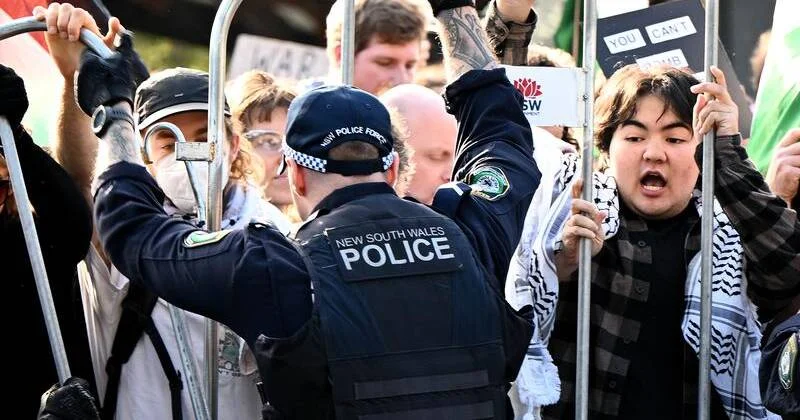
Four Corners has aired graphic videos showing police beating people under arrest, and the broadcast has already sharpened demands for deeper transparency in policing. One of the clips shows Canberra NRL player Tom Starling restrained while two officers punched him until he appeared to be unconscious.
The footage landed as viewers were still processing how routine complaints can disappear into the system. Justin Ellis said culture sets the tone inside policing organisations for how the law is enforced and how misconduct is handled, and he argued that a greater emphasis on transparency is one of the quickest ways to improve it. He said mandatory body-worn cameras, fuller reporting on the outcomes of complaints against police and data on civil settlement payments would all help.
Starling’s case gives the argument its sharpest edge. He was charged with assaulting four officers, then those charges were later dropped after a lengthy legal process. Two officers involved in that incident have since been charged with assaulting Starling and are due to go to trial later in 2026. It is the kind of slow-moving case that leaves the public with video, but not yet with a final account.
Another clip shown in the broadcast was even more brutal. It showed two officers bashing a schizophrenic woman, pepper spraying her in the eyes and genitals, kicking and stomping on her, then dragging her by the hair. Michael Kennedy said there was no defence for what was captured. NSW Premier Chris Minns said both officers in that video were fired and jailed, but he also argued they were not proof of a force acting with impunity. He told parliament on Tuesday that in any large police organisation there will be people with bad intent, those who make terrible decisions and, in his words, just bad people.
That pushback has not satisfied critics who say the problem is structural, not isolated. Sue Higginson said the system enables police to be violent with impunity and described it as a culture of excessive force, unbridled power and cover up. She said the default is for police to investigate themselves and that it is not working, calling for the Law Enforcement Conduct Commission to get more powers and more investigators. The watchdog is now under renewed pressure, just as the force faces fresh scrutiny over allegations of gratuitous violence and cover-ups.
For now, the broadcast has done what inquiries and complaints alone often do not: it has forced the question of whether oversight is built to expose misconduct, or to absorb it. The next test is whether NSW Police or the commission changes the rules, the staffing or the reporting that keeps these cases in the dark.