Scientists are warning that a powerful El Nino may be building in the Pacific, and one leading expert said he would not be surprised if it became a Super El Nino. Adam Scaife said there was “definitely something coming,” that it looked like it would be a big event, and that it could even be of record strength.
The warning matters now because it comes after May’s soaring temperatures and raises the prospect of more heat on top of what many places are already facing. El Nino is a natural Pacific climate pattern marked by warmer surface waters in the central and eastern equatorial Pacific, and when it develops it can reshape weather far beyond the ocean itself.
Under normal conditions, trade winds push warm water westward along the equator toward Asia. During El Nino, those winds weaken, warm water shifts east toward the Americas, and the Pacific jet stream can be forced south of its neutral position. That change can disrupt rainfall, drought and storm patterns from the northern US and Canada to the US Gulf Coast and southeast, from Chile to Indonesia, and across Australia and South Asia.
The knock-on effects can be severe. Some parts of the northern US and Canada become hotter than usual and face drought. The US Gulf Coast and southeast tend to turn wetter, raising flood risk. Chile is more likely to get heavy rainfall, while Indonesia is more likely to suffer drought. El Nino can also bring an extreme Pacific typhoon season, a more docile Atlantic hurricane season, a more varied and unpredictable South Asian monsoon, and a drier-than-normal Australia.
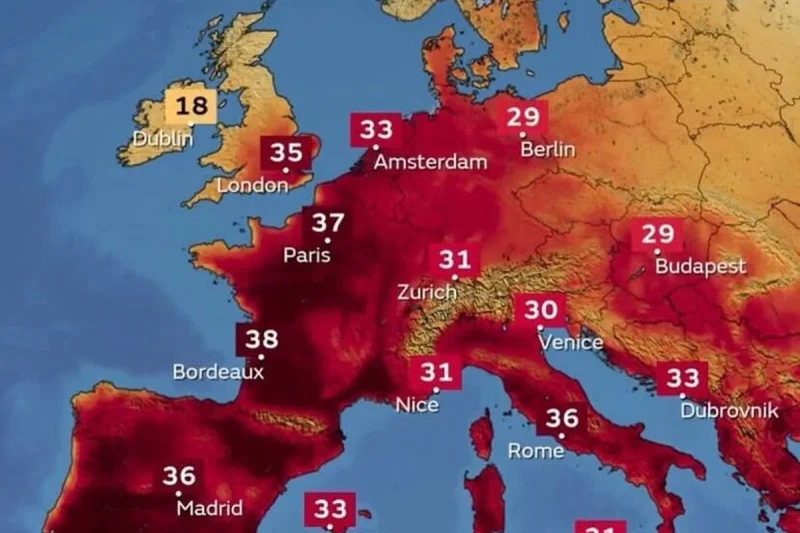
For the UK, the effects are usually weaker, but they are not negligible. El Nino can still lead to more dramatic weather extremes, colder winter temperatures later in the season, and hotter summers. Professor Bill McGuire said summer temperatures could certainly be affected, possibly this year but more likely next as the planet heats up, adding that he would not be at all surprised to see 40C-plus heat.
The friction is that scientists are talking about a pattern that is usually measured in Pacific temperature shifts, yet the concern is now about how far those shifts could spread. Mark Roulston said sea surface temperatures more than 0.5C above normal for the time of year are considered El Nino conditions, while a Super El Nino is often defined by waters more than 2.0C above normal. The next question is whether this warming keeps climbing into that range, because if it does, the weather impacts already being sketched out could become much more disruptive.