


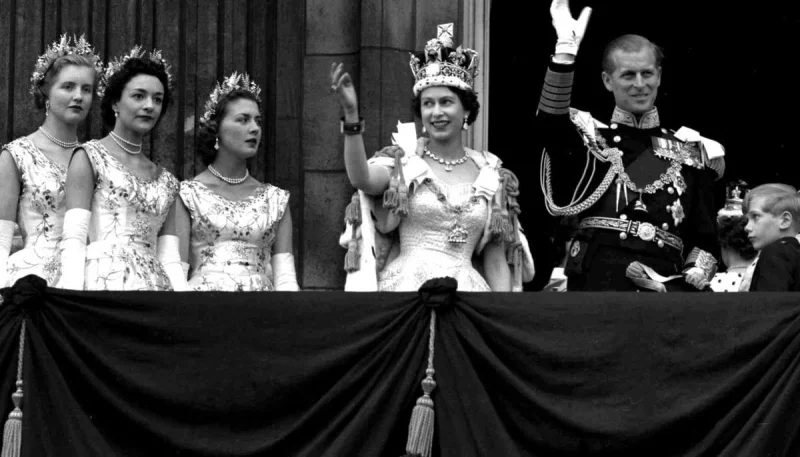
Royal historian Hugo Vickers has added a fresh wrinkle to the courtship story behind Elizabeth II’s marriage, saying the Queen Mother wanted her daughter to marry someone other than Prince Philip. In his new book, Queen Elizabeth II: A Personal History, Vickers says the preferred match was Hugh, Earl of Euston, later the 11th Duke of Grafton.
Vickers said the search for a husband was not happening in a vacuum. He pointed to the wartime years, when Queen Elizabeth and Princess Margaret were contained in Windsor Castle and Grenadier Guards were stationed there, as the family looked at possible matches for the future queen. The historian said the Queen Mother was especially drawn to the idea of an English aristocrat in uniform, telling readers that she “was very keen” her daughter should marry a Grenadier Guard.
That preference carried a social logic that mattered in the upper reaches of wartime Britain. Vickers said Grenadier Guards were “the most prestigious of all the British regiments” and described them as the top of the military ladder. He said the Queen Mother “placed a number of Grenadier Guards” on Princess Elizabeth’s path and believed it was “slightly in the cards” that she could have married Lord Euston instead. In Vickers’ telling, Hugh was not a random name brought up after the fact but a serious possibility before Elizabeth chose Philip.
The claim lands because it complicates a familiar royal romance. Hugh, Earl of Euston was being discussed as a potential match for Princess Elizabeth before she married Prince Philip, and Vickers said Lord Mountbatten later helped smooth the way for Philip while other suitors fell out of the picture. That left the future queen with a choice shaped by rank, service and family preference, not only personal feeling.
There was, however, already a competing view of Hugh’s future. In 1943, Sir Henry Chips Channon believed he was “reserved for a higher destiny — the very throne itself,” while Lady Brigid Guinness reportedly told him that Hugh would wind up with Princess Elizabeth because “she likes him.” Those remarks now read like a footnote to a path that did not happen, even as Vickers suggests it might have.
What remains unresolved is how close that alternative really came before Prince Philip prevailed. Vickers has said the Queen Mother would have loved Elizabeth to marry Lord Euston, but the route from royal favor to royal marriage is still partly hidden behind the wartime choreography of Windsor and the quiet intervention of those who helped Philip move ahead.
