


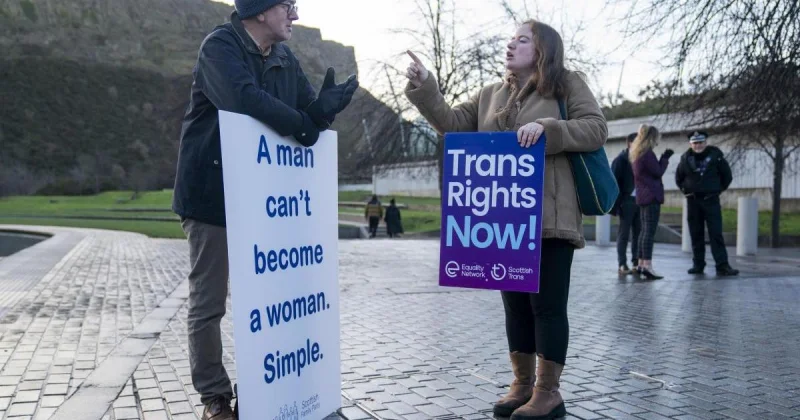
A letter published on May 22 challenged Marissa MacWhirter’s claim that the row over sex and gender on the Scottish Parliament website was really about a moral panic. The writer said women raising sex-based rights concerns were unfairly cast close to far-right politics, and that the evidence used to make that case did not support it.
The dispute is being searched now because MacWhirter’s piece, titled “Scotland’s trans panic is drowning out the real abuse women face,” has become part of a wider argument over how Parliament presents sex and gender. The letter does not treat that argument as a side issue. It treats it as a test of whether public language about women’s rights is being flattened into a political warning label.
At the centre of the rebuttal is a direct challenge to the framework MacWhirter used. The letter says her article drew heavily on an academic paper about “organised transphobia” and repeated phrases such as “othering,” “moral panics” and “reactionary politics,” while also leaning on Carnegie Endowment material that placed the issue inside a global backlash against women’s and gay rights. That combination, the letter argues, pigeonholes gender-critical arguments before they are properly tested.
The writer also says the Supreme Court’s judgment in For Women Scotland settled one part of the legal argument by confirming that “sex” in the Equality Act means biological sex. That point matters because it turns the fight over wording into a fight over legal meaning, not just tone. The letter says abuse of women in public life is very real and very serious, as is male violence against women, but argues that those realities do not justify treating women’s boundaries, freedom of association and accurate data as disposable.
That is where the friction lands. MacWhirter’s article framed women concerned with sex-based rights as caught up in a moral panic and, the letter says, placed them uncomfortably close to far-right politics. The response says that framing itself is the problem, because it shuts down a debate that ought to be open, lawful and explicit. Women, it says, deserve truthful language, lawful policy and open debate.
The broader dispute is not over a single sentence on a website. It is over whether institutions, including the Scottish Parliament website, can describe sex and gender in a way that survives both legal scrutiny and political disagreement. The letter was a direct response to a May 22 piece, not a new parliamentary decision, and it leaves one question hanging: what exactly was changed on the site, and who decided it should be handled this way?
Until that is answered, the argument is likely to stay where it is now — in public, contested and unresolved, with the meaning of a single word carrying more weight than most official phrasing ever does.
