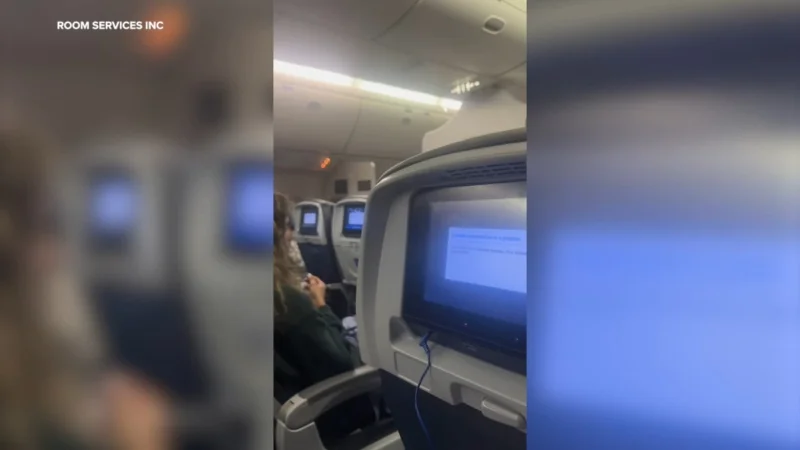
A flight out of Newark bound for Spain turned back to the airport about an hour into the trip after a passenger named a Bluetooth device “Bomb.” The crew treated it as a safety issue and the plane returned to Newark.
The moment landed on a busy travel day because passengers heard repeated calls over the cabin to switch off their devices, and the crew did not shrug off what had been described as a joke. One crewmember told travelers, “We have one passenger that seems to be making a funny joke that isn't so funny and it's going to be compromising the safety of this flight.”

The flight had already been in the air for about an hour when it turned around. The route was headed to Spain, which made the return more disruptive than a short hop back to a nearby airport and left passengers facing an abrupt stop to a long-haul trip. Similar cases have drawn attention before, including another Newark-to-Mallorca flight that turned back after a Bluetooth alert, showing how quickly cabin technology and security concerns can collide.
What stands out here is the gap between the passenger’s intent and the crew’s response. The Bluetooth name was described as a joke, but on a commercial flight, especially one crossing the Atlantic, the word “Bomb” was enough to trigger a chain of caution that overrode any explanation offered by the person involved. That is the friction in the case: a private joke became a public safety problem the instant it reached the cabin crew.
The pilot said the passenger would be arrested, but the account does not say whether that happened. The source also does not name the passenger, leaving the episode centered on the flight itself and the decision to turn it back rather than on the person who set it off. For travelers, the consequence was immediate: a trip to Spain ended before it had really begun.