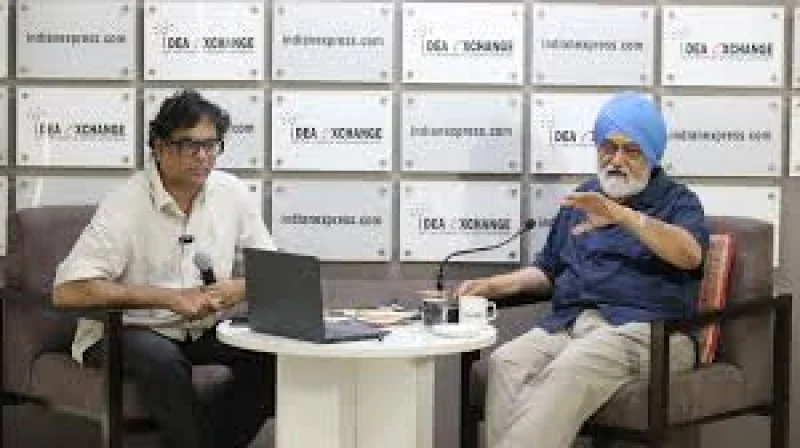
Montek Singh Ahluwalia said the Reserve Bank of India was right to allow the rupee to weaken as global pressures built, arguing that the currency should move with market realities rather than be defended at all costs. He said he did not think letting the rupee slip was the wrong decision.
The idea drew fresh attention because the rupee had recently come close to the Rs 97-per-dollar mark before recovering in the last few sessions. For exporters, importers and market participants, that slide was a reminder that the currency is being pulled in different directions at once: by higher oil costs, by foreign money leaving Indian assets and by a broader swing in global risk appetite.
Speaking in an interview, Ahluwalia said the weakness was pretty much unavoidable given India’s widening external pressures and slowing capital inflows. “The whole idea that the currency should reflect market conditions implies that when market conditions turn adverse, you allow the exchange rate to depreciate a bit,” he said, adding that for a long time India had been able to manage its current account deficit comfortably because capital inflows were strong.

He said those inflows dried up over the last two years or so, leaving less room to hold the exchange rate unchanged without using reserves. “Those capital inflows dried up over the last two years or so. So unless you intend to make up the gap by simply running down reserves, which is not a good idea, you would expect that the exchange rate would take a little bit of a hit,” he said. He also said depreciation can help exports become more competitive in the medium term.
That argument cuts against a harder line that some economists and policymakers have taken, namely that defending a fixed exchange-rate level at all costs is no longer sustainable when a major external shock hits. The rupee has been under pressure as the Iran conflict pushed crude prices higher and raised concerns about inflation and India’s import bill. India imports nearly 85% to 90% of its crude needs, and foreign portfolio investors have been pulling money out of Indian markets amid global uncertainty and higher US bond yields.
Ahluwalia’s remarks do not answer how far the central bank is willing to let the currency move before it steps in more aggressively. For now, the message is clearer on one point: in his view, the RBI should not burn through reserves or force the rupee to hold a level the market will not support.