


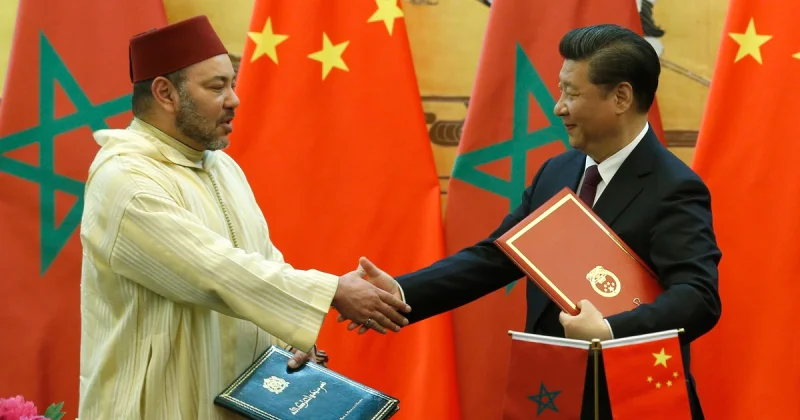
Chinese automotive brands sold 18,053 vehicles in Morocco in 2025, a 215 percent jump from a year earlier that pushed their market share to 7.67 percent and made them a far bigger force in the country’s car market.
The surge came as Morocco’s total vehicle registrations rose 33.4 percent to a record 235,372 units, giving buyers more choice and giving Chinese brands a larger platform than they had in 2024, when they sold 5,740 units and held 3.25 percent of the market. For a market long defined by the weight of Renault and Stellantis, the change matters because Chinese names are no longer nibbling at the edges; they are taking a visible slice of the same passenger vehicle business that has always drawn the fiercest competition.
That is why the numbers are being watched closely in Morocco now. Chinese brands were still a modest presence a year earlier, but in 2025 they moved into a more serious position by increasing sales across both passenger and light commercial vehicles. Passenger models made up 74.5 percent of their sales, up from 61 percent in 2024, with passenger vehicle volumes rising from 3,502 units to 13,456 units. The shift shows that Chinese makers are not relying only on commercial fleets or niche imports; they are pushing into the showroom traffic that matters most to dealers and to the rest of the industry.
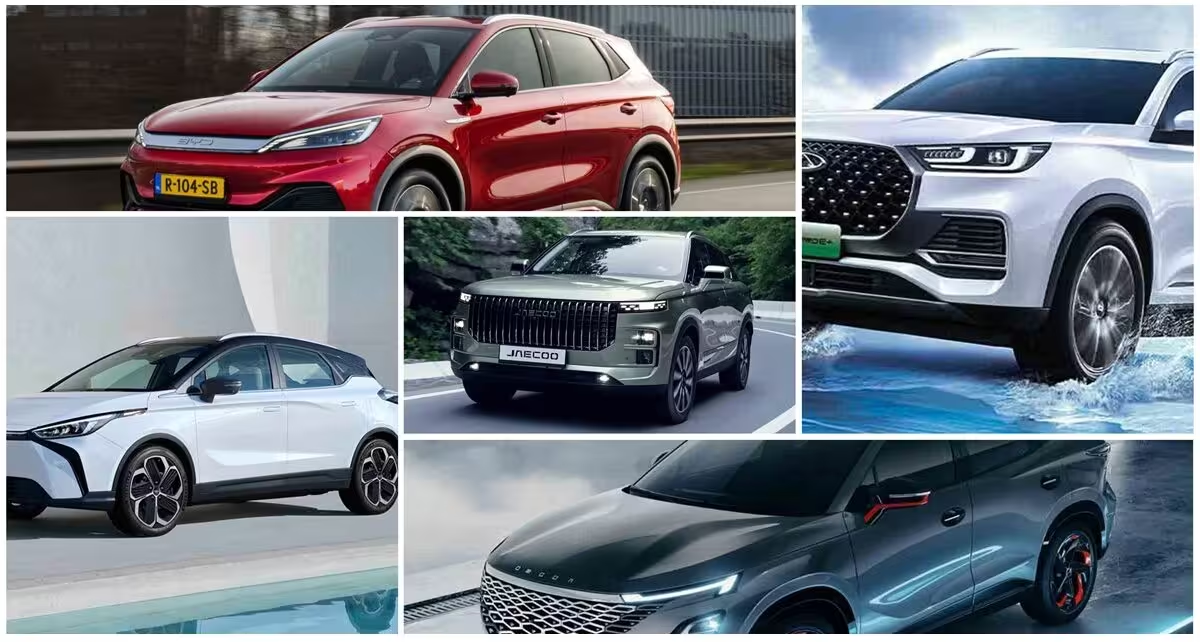
BYD led that advance with 3,702 registrations, up from 701 in 2024, and accounted for 20.5 percent of total Chinese brand sales in Morocco. Changan followed with 1,898 units and GWM with 1,439, while DFSK led the light commercial segment at 2,778 units and Dongfeng reached 1,460. Soueast recorded 656 passenger vehicle registrations in its first year on the market, and brands including Deepal, Dongfeng VP, Jetour, Leapmotor, Zeekr and Lynk & Co established initial volumes, suggesting the category is broadening rather than depending on one name to carry it.
That breadth is what gives the trend its friction. Morocco remains a manufacturing hub where Renault and Stellantis produce hundreds of thousands of vehicles annually for export, and those operations sit beside a home market that is now absorbing a faster-moving set of Chinese rivals. The competitive pressure is landing first in the passenger segment, which has historically been the most contested, and the knock-on effect could reach local supply chains as brands, distributors and component makers adjust to a market that is growing quickly but no longer looks as predictable as it did a year ago.
What remains unclear is how much of the rise is being driven by electric vehicles and how much by conventional models. The answer matters because it will show whether Chinese brands are winning by offering a new technology mix or by simply undercutting established players on price and range. Either way, the 2025 figures show that morocco is no longer just an export platform for the global auto industry; it is becoming a tougher and more crowded market to win inside.
