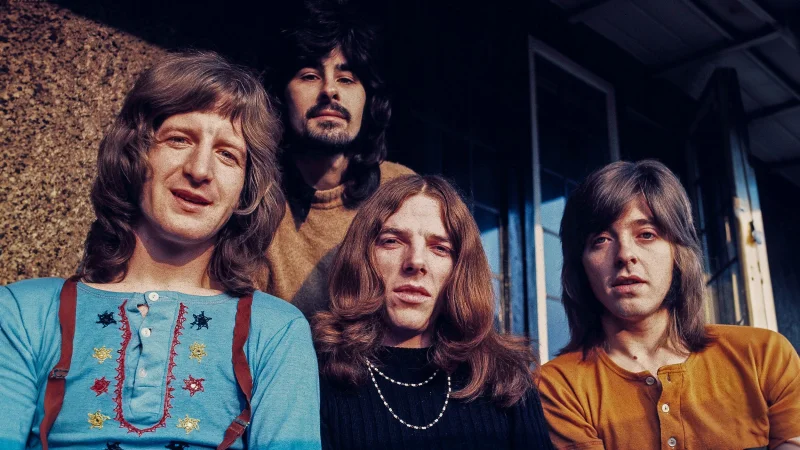
Todd Rundgren says George Harrison left Badfinger’s Straight Up unfinished, and Apple Records had to scramble to save an album that had already been started twice. Rundgren, 23 at the time, was called in as producer number three after Harrison abandoned the sessions and the project was still hanging over songs that would later include “Baby Blue” and “Day After Day.”
People search George Harrison now because the album’s backstory is one of pop’s strangest production detours: a record that had to be rescued after its first versions failed to satisfy Apple’s American arm. Badfinger had first cut Straight Up in January 1971 with Geoff Emerick, who had also coproduced No Dice, but those sessions were rejected and the band was sent back to the drawing board. Harrison then stepped in roughly six months after releasing All Things Must Pass, and the band restarted the record with him in May.
That second attempt never got far. Rundgren says Harrison became consumed by the Concert for Bangladesh after Ravi Shankar brought him the humanitarian crisis, and after about five songs the former Beatle told the band, “I’m finished. I can't do this.” Rundgren was the next call. At the time, he said, he had built a reputation for getting things done quickly and without fuss, which was exactly what Apple wanted: assurance that the record would actually be finished.
The unresolved question is how much of Straight Up came from those earlier Geoff Emerick and George Harrison sessions and how much belonged to Rundgren’s own finishing work. Rundgren has said “Flying” was one of the tunes lifted from Emerick’s tracks, and that a whole album existed from that first pass, but the final balance between salvage and reinvention is still part of the album’s lore. What is clear is that the third producer got the job done, and the chaos that nearly buried Straight Up is now part of why the record is remembered at all.
For Badfinger, the handoff turned a stalled project into the album many still consider the group’s finest, but it also left behind a trail of unfinished sessions, rejected cuts and a Harrison detour that ended before the work could be completed. Rundgren did not inherit a blank slate. He inherited a record that had already survived two false starts, and the fact that Apple needed producer number three tells the real story: this was not a creative procession, but a rescue.