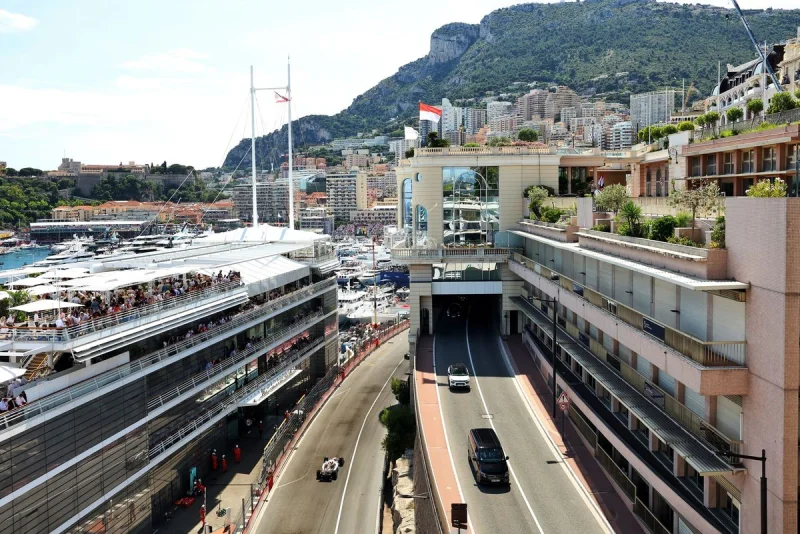
The FIA has banned Straight Mode for the Monaco Grand Prix and will not allow any zone to activate the aerodynamic system on the most cramped weekend of the Formula 1 season. It has also imposed a tighter electric-power profile for the race, as Paolo Filisetti examined the changes being made to F1 cars’ performance at Monaco.
The timing matters because the Monaco Grand Prix takes place next week, on a circuit unlike any other on the calendar. Monaco’s frequent braking makes it suited to harvesting energy, and its short straights are places where electric charge can be used, but the FIA is cutting back the tools teams normally rely on to trim lap time. The wings will run with a fixed flap configuration based on the angle of attack set in Monaco, and there will be no deployment of drag-reduction systems on either the front or rear wing.
The electric-power rules are just as specific. The FIA has set a usage profile for the 350 kW available that starts reducing linearly at 200 km/h and reaches zero at 300 km/h, a threshold brought forward by 90 km/h from the standard profile used elsewhere. In practice, that means the cars lose electric assistance much earlier than usual on a lap where top speed can matter most. During an overtaking move, Overtake Mode stays active, but even then power drops less rapidly only until 300 kph, then falls to zero at 310 kph, with 150 kW available at 300 kph only while a pass is being attempted.
That compromise is the point of friction in Monaco. The FIA judged a standard Overtake Mode profile too dangerous for the run from the tunnel to the Nouvelle chicane, where simulations suggested 340 kph could be reached before the braking zone and the stopping point would become uncomfortably fast for a street circuit with little or no run-off. So the governing body kept Overtake Mode to help passing, but not the faster standard profile, which would have allowed a sudden linear drop in power only after 340 kph. It is a rare case where the FIA has decided that helping overtaking still has to sit below the safety line.
What happens next is simple enough: teams will learn next week whether the new balance of fixed aero and restricted electric power changes anything at all in a place where overtaking is already notoriously rare. Monaco will still reward precision more than raw speed, but the FIA has made clear that this year the lap will be managed on its terms, not the teams’.