


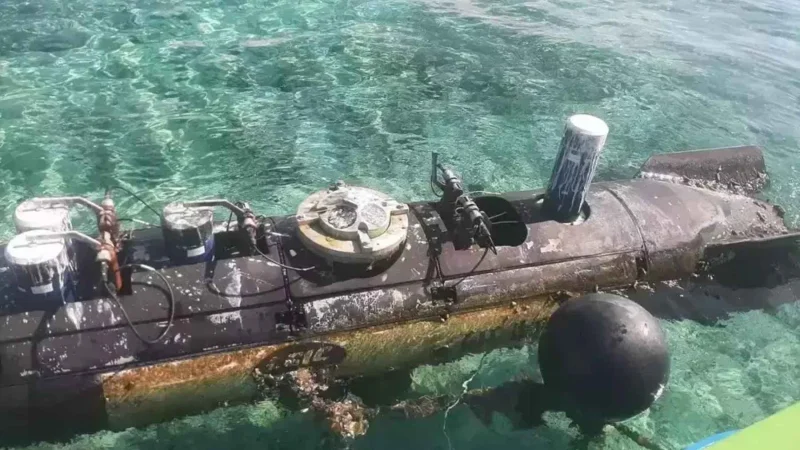
China is pushing its submarine force beyond the coastal role that defined it for decades. Beijing is accelerating investment in nuclear submarines as it moves toward a blue-water navy with longer-range reach in the Indo-Pacific, a shift that changes how regional navies have to think about the water below them.
That is why the China Transparent Ocean Program search is drawing attention now. The modernization is happening in real time, not as a distant concept, and it is already altering calculations about covert patrols, deterrence and maritime control in contested areas where submarines can stay hidden for long periods.
For years, China leaned heavily on diesel-electric submarines built for waters such as the South China Sea and East China Sea. It still operates approximately 50 to 60 of those boats, but the balance is moving toward nuclear-powered platforms that can remain underwater for prolonged periods without frequent surfacing. That endurance matters because it gives submarines more room to conduct intelligence gathering, complicate adversaries’ plans and sustain pressure far from home waters.

The next major step is expected to come with the Type 095, the successor to the Type 093, also known as Shang. Available assessments indicate the new boat should bring better stealth, stronger sensor systems, improved propulsion efficiency and upgraded armament. Those changes are expected to lower acoustic signatures and widen the mission set to include anti-ship warfare, intelligence collection and land-attack strikes.
China’s current ballistic missile submarine force still shows the limits of the older model. The Type 094, known as Jin, forms the backbone of that fleet and carries JL-2 submarine-launched ballistic missiles, but it faces constraints tied to range and endurance in contested environments. That gap is the key reason the buildup matters now: China is expanding long-range submarine power, but its current strategic boats do not yet fully match the mission Beijing appears to be preparing for.
The broader shift has been building since the late 20th century, as China moved away from dependence on Soviet designs and technology toward a more diverse fleet with growing domestic capability. The next generation, the Type 096 or Tang, is being developed with expected gains in stealth, endurance and combat readiness, though no service date has been confirmed. For regional militaries, that leaves the underwater balance in the Indo-Pacific changing faster than the timetable for China’s newest submarines can be pinned down.
What Beijing has already made clear is the direction of travel. The old focus on shallow-water defense is giving way to a force built for longer, quieter and more consequential missions. What remains unresolved is how soon the Type 095 and Type 096 will arrive to make that shift fully real.
