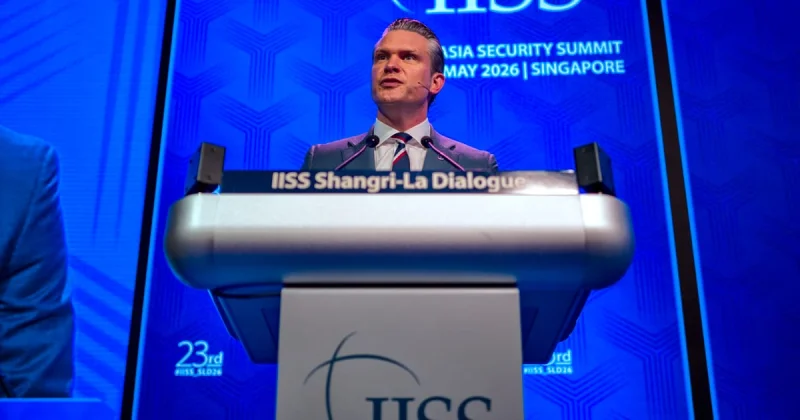
AUKUS moved its Pacific security pact into a new phase on Saturday, announcing its first Pillar Two signature project: a joint effort by Australia, the United Kingdom and the United States to develop advanced uncrewed undersea vehicles. The program is meant to deliver a family of adaptable multi-mission drones for undersea operations, giving the alliance a fresh tool beneath the surface.
The announcement matters because it turns a broad promise into a concrete buildout. Pete Hegseth said the project will accelerate delivery of advanced capabilities to warfighters, while Richard Marles said the three countries are putting real capability into the hands of the warfighter next year. For readers tracking submarine warfare and undersea autonomy, that is the first firm sign that AUKUS Pillar Two is moving from concept to hardware, alongside other work already underway in areas such as cyber, quantum computing and defense systems. Related efforts, including a U.S. Navy attack submarine drone program and separate submarine control work, show how quickly the undersea contest is expanding beyond traditional crews and hulls.
AUKUS was created in 2021 to deepen military cooperation among the three allies, with a core focus on countering China’s influence in the Indo-Pacific through nuclear-powered submarines. Its first pillar centers on submarines, including Australia’s planned acquisition of U.S. boats, the joint development of a new AUKUS-class submarine and facilities in Australia to host U.S. and British submarines. Pillar Two covers advanced technologies, and this new undersea drone project is the clearest sign yet that the alliance wants those capabilities to land in operational forces, not just planning rooms.
That push carries more weight because the pact spent much of mid-2025 under a cloud. The Pentagon ordered a review of AUKUS, and Australia and the United Kingdom scrambled to reassure Washington that they remained committed to the deal. Trump later reaffirmed his backing in October, and Hegseth now says the review only strengthened the partnership and that the United States is moving as fast as it can to expand the combined submarine presence in the Pacific. John Healey put the political edge more bluntly, saying for too long AUKUS had talked too much and delivered too little, and that has now changed.
The immediate test is whether the alliance can turn Saturday’s announcement into deployed equipment on the timeline it set for next year. The countries did not identify which companies or specific programs will build the new UUVs, leaving the industrial side of the project unresolved even as the strategic message was clear: AUKUS wants undersea advantage in the water, not just in communiqués.