


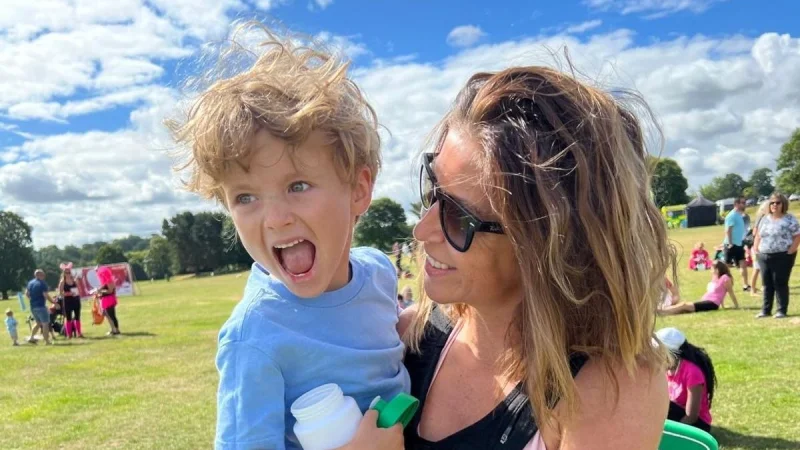
Selina Moss-Davies was 28 when a hug from her mother changed everything. Pauline felt a lump high on her breast, booked a clinic appointment without delay, and doctors later found a 38mm aggressive grade three tumour.
That diagnosis came in June 2011, after Moss-Davies had first noticed the lump in March and was told by her GP that there was nothing to worry about. The reassurance did not match what specialists later found, and it is the reason her story still cuts through now: breast cancer can be hiding in plain sight, and one family member’s instinct can speed up the path to treatment.
At the Peggy Wood Breast Centre at Maidstone Hospital, biopsy results confirmed what Moss-Davies had feared most. She was told she had breast cancer and that she carried the faulty BRCA1 mutation, a genetic change that raises the risk of breast, ovarian and pancreatic cancers. The discovery turned what she thought might be a benign fibroadenoma into something far more serious.
Moss-Davies has said she had never heard of the gene and was shocked by the speed of the conversation. Chemotherapy began straight away. She went through six rounds in 2011, lost all her hair within the first week, and by her second session the tumour had shrunk to 80mm. Her final treatment came in November that year.
The story also carries a harder edge. Moss-Davies was a mother of two, and the treatment plan forced immediate decisions about her future fertility. She has described that conversation as awful, because she hoped one day to have another child. It was a cost of treatment that sat beside the medical emergency, not behind it.
Four weeks after chemotherapy ended, she underwent a nine-hour double mastectomy with immediate reconstruction. That is the part of the story that matters today: a cancer caught by chance, tested by delay, then treated with urgency once the right hands were on it. What remains unanswered is how Moss-Davies is living now after surgery and reconstruction, but the path that led her there was anything but ordinary.
