


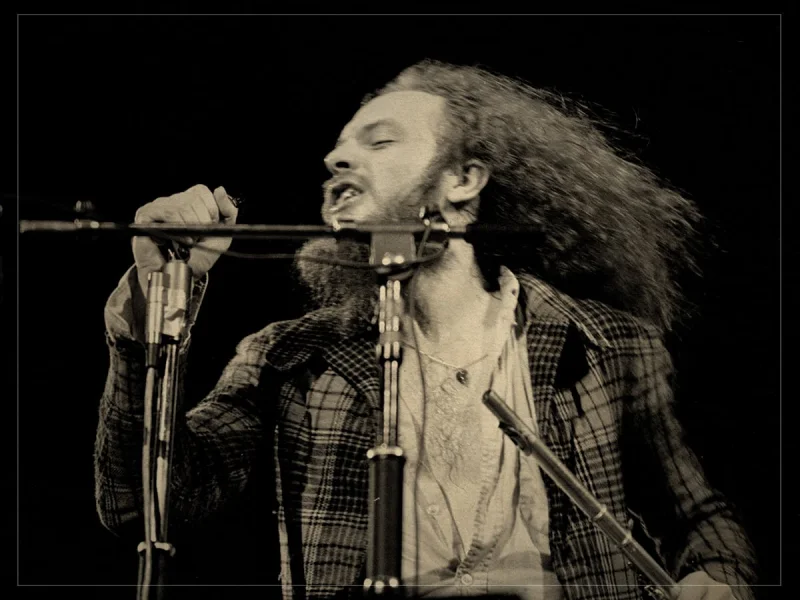
Ian Anderson has singled out Lou Gramm as rock’s finest tenor, calling the former Foreigner singer a voice with rare control, diction and rhythm. In a recent Far Out interview, Anderson said he has “a soft spot” for Gramm because of his “incredible vocal ability” and added, “I do believe he is rock’s finest tenor.”
The remark lands now because it comes from one of rock’s most recognisable frontmen, a musician whose own career has long been defined by pushing his voice beyond what most singers would attempt. Anderson said he made records in 1982 and 1984 in which he sang at the top of his range, even though he is a baritone whose normal reach runs to an E or an occasional hasty F. On those recordings, he said, he was singing F# and G.
That is where the endorsement becomes more than a compliment. Anderson was praising Gramm’s ability to deliver difficult material cleanly while admitting, in effect, that he knew how hard that can be to sustain. He said Gramm had good diction, articulation and rhythm, and he called him a truly great singer. The point carries extra weight because Anderson added that he himself could not keep that kind of vocal demand up night after night.
He has lived that problem before. Anderson said he lost his voice in 1984 and had to take pretty much a year off to recover. He cancelled three shows in Australia and two shows in the USA, and over the course of a month he said he accounted for more than 50 per cent of all the shows he has cancelled in his entire 44 years in music. It is a blunt reminder that the studio and the stage do not always ask for the same thing.
Anderson’s comments also fit the way he has described his career more broadly: as a musician drawn to experimentation and to sounds that do not stay in one lane. He recalled that the Beatles’ Sgt Pepper’s in 1967 and Pink Floyd’s Piper at the Gates of Dawn were signposts for progressive rock, then said the next big impetus came two years later when Jethro Tull first toured with Led Zeppelin and saw how bands could absorb ideas from different cultures. That impulse helped define the music he later made on records such as The Broadsword And The Beast and Under Wraps.
For now, the direct answer to the question driving the interview is simple: Anderson meant it. He did not just praise Gramm in passing; he ranked him above every other tenor in rock, and he did so while making clear that the hardest thing in singing is often not hitting the note once, but keeping it alive night after night.
