


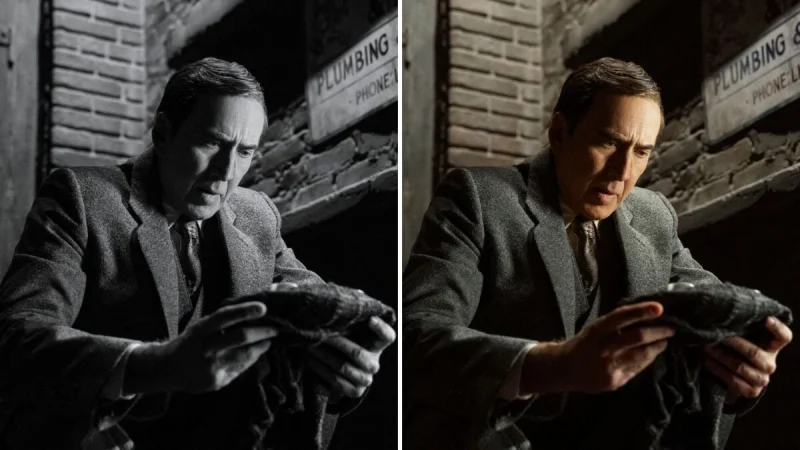
Prime Video has released Spider-Noir with two viewing options, “Authentic Black and White” and “True-Hue Full Color,” and the black-and-white version comes out ahead. The same story plays in both formats, but the monochrome cut better fits the show’s film-noir roots and the sharp contrast of its bright highlights and dark shadows.
That matters now because viewers are being asked to choose not just whether to watch Spider-Noir, but how to see it. Nicolas Cage, who plays detective Ben Reilly, said the split presentation was intentional. “The truth is, they both work and they’re beautiful for different reasons,” he said, calling the color version “super saturated and gorgeous” and adding that teenage viewers might appreciate it while still wanting the option to watch in black and white.
Spider-Noir is built from the language of old noir, and the black-and-white option makes that immediately clear. The reviewer found it looked cooler than color and matched the show’s inspirations more cleanly. The lighting scheme, with its harsh light and deep shadow, seems designed for that format. In monochrome, the images feel more deliberate, more stylized, and more in step with the detective-story mood the series is chasing.
Color does not flatten the show so much as expose what is underneath it. The version in “True-Hue Full Color” remains fairly vintage, but it also brings out details that disappear in black and white. Cat Hardy’s makeup stands out. Robbie Robertson’s orange ensemble jumps off the screen. Many rooms are painted bright yellow or red, a reminder that the design teams were building a world meant to survive both presentations. The reviewer said viewers should make time for at least one episode in color, even while making clear that black and white is the better choice overall.
That is where Cage’s view and the judgment part ways. He sees both formats as valid, and he said he wanted younger viewers to have the chance to experience the concept in black and white, even if color feels more familiar to them. He also suggested that a monochrome version might nudge some of them toward earlier movies and the art form behind them. The comparison lands differently: color is attractive, but black and white is the version that most fully unlocks the series’ look.
For Prime Video viewers, the choice is built in from the start, and that makes the viewing experience part of the story’s appeal. Some will likely go straight for the version that most closely echoes the genre Spider-Noir is borrowing from. Others may start with color to catch the production details, then come back for the monochrome cut. Either way, the real test is no longer whether Spider-Noir can work in both forms. It can. The question now is which one most people will think of as the show’s true face.
