


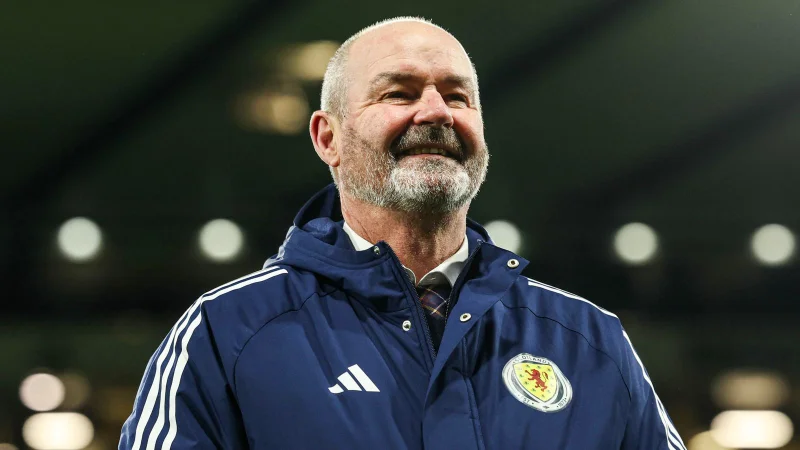
Steve Clarke has signed a new contract that will keep him as Scotland head coach until 2030, a move that ends months of uncertainty over whether he would walk away after this summer’s finals. The 62-year-old said the decision felt right because he believes he is still the best man for the job.
The extension matters now because Scotland are heading into the tournament in the United States, Canada and Mexico with their manager settled for the long term. Clarke will be in post for 11 years by the end of the deal, giving the squad a level of continuity that has become a rare commodity in international football.
Clarke said he had a clearer picture of what comes next than someone arriving fresh to the role. He also said he knew he had a group of players capable of qualifying for a World Cup, and that the agreement before the tournament gives “everybody clarity moving forward.”
That confidence was not always there. At the start of Scotland’s World Cup qualifying campaign, Clarke said he was around 75% sure it would probably be his last campaign, and after qualification he cut that assessment to 50-50. Euro 2024 had been bruising: Scotland lost to Germany and Hungary and drew with Switzerland, a run that left the manager facing sharp pressure and, in his own words, people clamouring to get him out of the job.
Instead, he has chosen to stay and make a case for patience. Clarke said Scotland have had nine or 10 changes between their first and second European Championship squads, then another nine or 10 changes between the second Euros and this World Cup squad, pointing to what he called a natural evolution. He said he has been looking at younger players to work out what talent is there for the future, while still trying to keep competition high for the established names.
That balance, he argued, is why the current set-up has worked for seven years and why he wanted the deal done before the tournament begins. The new contract also suggests Scotland believe continuity is preferable to another reset, even as the search for the next wave of players continues. The question now is not whether Clarke will be there, but how far his settled hand can take Scotland once the finals begin.
