


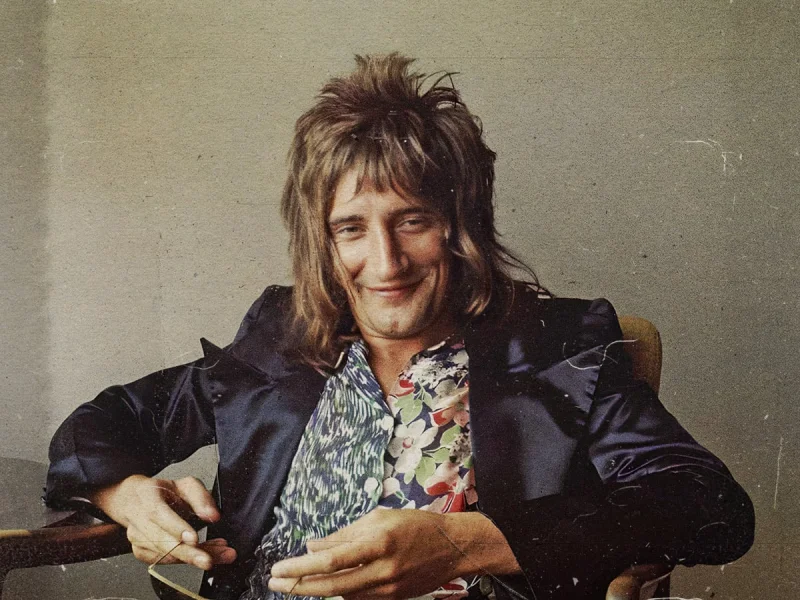
Rod Stewart has said the voices that shaped him were not polished showstoppers but Sam Cooke and Otis Redding, the singers he wanted to sound like above all others. He said that even as he chased his own style, he was trying to arrive at a sound that was different from everybody else.
That explanation gives a new frame to Stewart’s long career because the question of how he built that rasp has followed him for decades. In 2019, he said he had always appreciated great singers, and he has now pointed more specifically to the artists he used as his blueprint.
Stewart said he grew up listening to Frank Sinatra because his parents were big fans, and by around age nine he was already studying the way Sinatra sang and trying to do the exact same thing. That sits neatly alongside his later admiration for Buddy Holly, whose energy, he said, kept making him fall in love with music over and over again. It also helps explain why his own voice never settled into one mold.

He described a period when he was not sure about his own voice, and said that was when he absorbed the talents of Cooke and Redding most deeply. He said Redding moved him to tears when he saw him live in concert, and he has been direct about the goal that followed: “I wanted to always sound like Sam Cooke and Otis Redding, so that’s the way I went – I suppose I was trying to be different from anybody else.”
That is the small contradiction at the heart of Stewart’s singing life. He had a completely different tone from Sinatra’s velvety smooth belting, yet he still studied Sinatra’s technique and tried to copy it. He also has never smoked a single cigarette, a detail that fits the discipline behind a voice that he has treated carefully for years, approaching singing like an athlete and looking after his vocal cords.
Stewart has occasionally drifted away from rock and into softer sounds and the Great American Songbook, but he has been most powerful in rock, especially as the driving force in Faces. The point now is not that he changed direction, but that he has finally laid out the voices that guided him there. The open question is no longer what Stewart heard in his head; it is how much of his most recognizable sound came from trying to become someone else first.
