


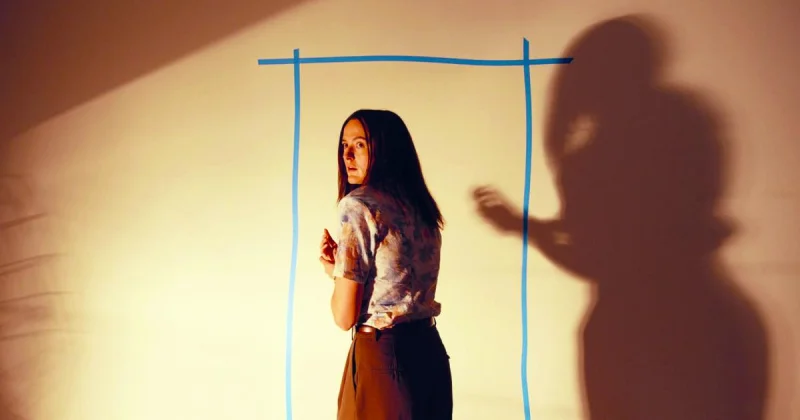
Backrooms has moved from YouTube shorts into an A24 feature, carrying Kane Parsons’s liminal-space nightmare from a niche online idea into the mainstream horror pipeline. The 20-year-old filmmaker, the youngest ever to work with the studio, built the original series with Blender and Adobe After Effects, and the new film keeps that same visual grammar: empty offices, dead malls and other places that feel abandoned before they are even left behind.
The movie centers on Clark, an architect turned furniture store owner who finds a portal to a mysterious realm of backrooms in the basement of his showroom. He cannot make sense of what he has found, and his therapist, Dr Mary Kline, cannot pull him out of it by explanation alone. That setup matters because Backrooms is not built around a monster with a name or a clear path through the dark. It is built around a space whose rules, governing entities and meaning beyond the doorway are intentionally left blank.
Parsons has said on the A24 podcast that modern society is drifting into a spiral of industrialism and monoculture, and that he wanted to capture the feeling of infinite bureaucracy on screen. He also said, in effect, that there is probably no better symbol for that kind of sameness than a drop ceiling. In Backrooms, the fear comes from places that look familiar but feel wrong, as if the world has continued moving while some other part of it was quietly sealed off and forgotten.

That idea sits inside a broader visual tradition that has been gaining force online and in horror filmmaking alike. Liminal spaces are the in-between places people pass through without noticing them for long: offices, airports, department stores, dead malls and other so-called non-places. The internet first latched onto that feeling in 2003, when a photograph from the renovation of a furniture store in Oshkosh, Wisconsin, pushed the idea of the backrooms into online conversation.
What Parsons has done is translate that internet mood into a feature-length thriller without sanding away the uncertainty that made it work in the first place. The film retains the conceptual framework of the YouTube shorts, but it also leaves the biggest questions unanswered: who, if anyone, governs the endless space, and what rules decide what happens once someone crosses in. That uncertainty is the point. Backrooms joins a horror line that treats buildings as predators, the same broad tradition that gave earlier nightmare architecture its power in films such as Suspiria and Inferno.
For viewers, the appeal is simple enough to understand and hard to escape once it has taken hold. Backrooms takes a short-form internet concept and stretches it into a studio feature without losing the dread of not knowing what is on the other side of the wall. What remains unresolved is also what will decide whether the film lands as a one-off conversion of a viral idea or the start of something bigger for Parsons, whose feature debut has now moved liminal-space horror from the browser window to the cinema screen.
