


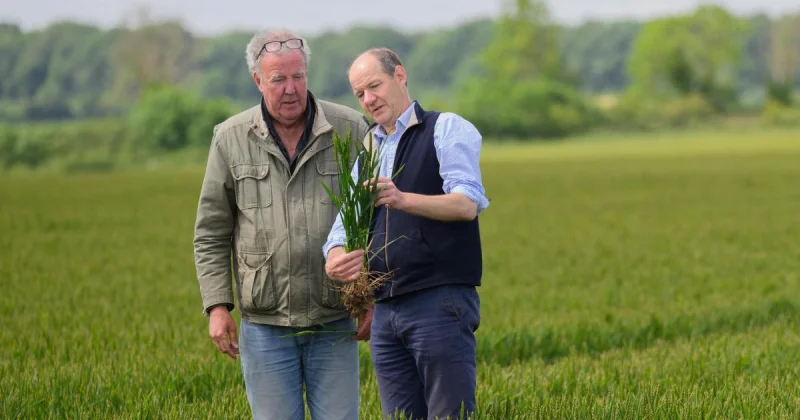
Jeremy Clarkson has turned a farming show about failure into a very profitable Cotswolds machine. By the time series five was being reviewed, his Farmer’s Dog pub had already needed a nearby field converted into a 360-space car park just to cope with the crowds.
That is why the new series is being searched now: Clarkson’s Farm is no longer just a television gamble, but part of a real-world business empire that now pulls in tourists, drinkers and shoppers. His Diddly Squat farm shop sells branded hats, cufflinks and even a jar of honey with his face on it, while Hawkstone beer reported sales of £21.3m in the year to March 2025. The beer brand has a stated aim of putting Peroni out of business, which is about as far from a struggling hobby farm as it gets.
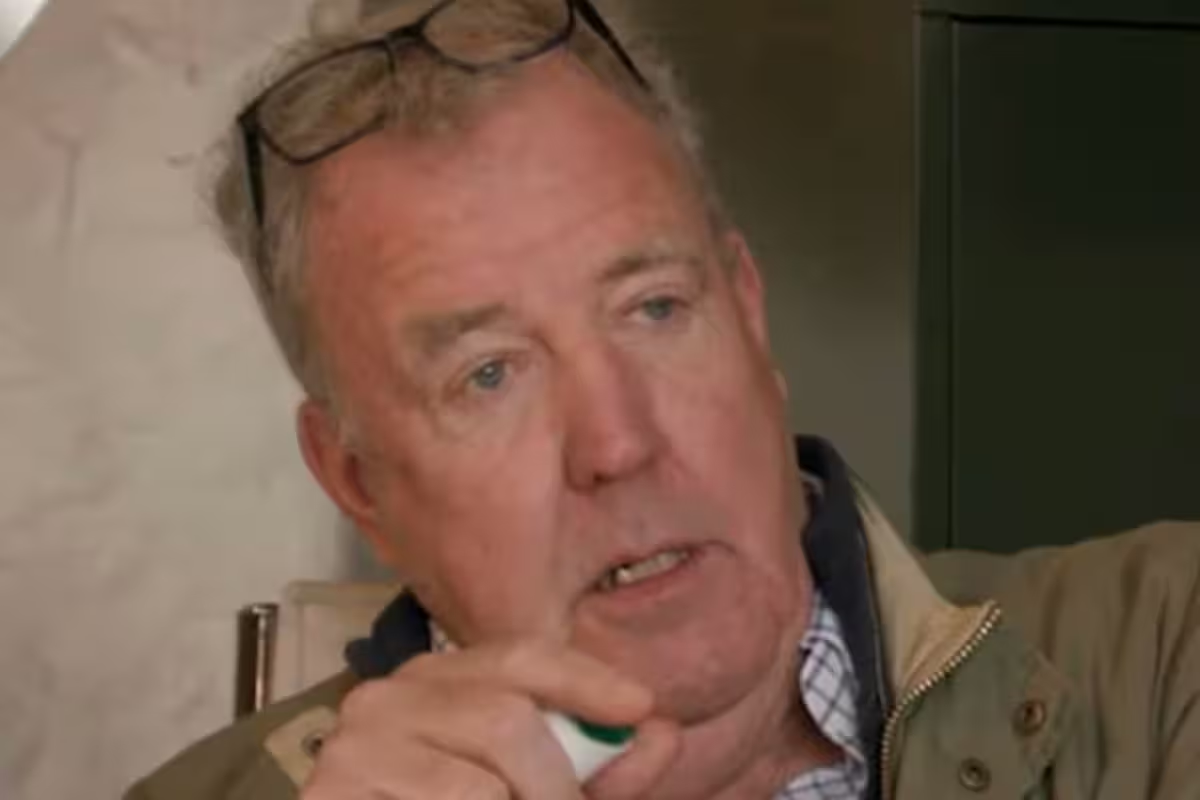
The scale of it has changed the feel of the whole enterprise. Clarkson is no longer merely filming fieldwork and livestock mishaps; he has become a kind of Cotswolds mascot, with a pub, a farm shop and a beer label all feeding the same celebrity draw. Even the review’s look at a Dutch potato farmer — someone who has optimised every inch of his land — serves as a reminder of how far Clarkson’s own operation has moved from the business of farming to the business of Clarkson.
That is what makes the new series harder to pin down. Clarkson starts it with iPhone footage from hospital, chest pains and the admission that he was apparently days away from a catastrophic heart attack. He also says he began weight-loss jabs and started eating yoghurt. Yet the grimmest commercial complaint attached to the pub is not the weather, the harvest or the margins; it is the number of pint glasses tourists steal. For a show sold as a portrait of farming difficulty, that is a very strange kind of success.
The 2024 farmers’ protest is folded into the series too, though it is described as curiously minimised, which only sharpens the oddness of the whole project. Clarkson’s Farm can still trade on struggle, but its star’s public image now runs on crowds, retail and booze. The open question is not whether the brand works — it plainly does — but how long the programme can keep asking viewers to believe in hardship while Clarkson keeps building attractions that people line up to consume.
