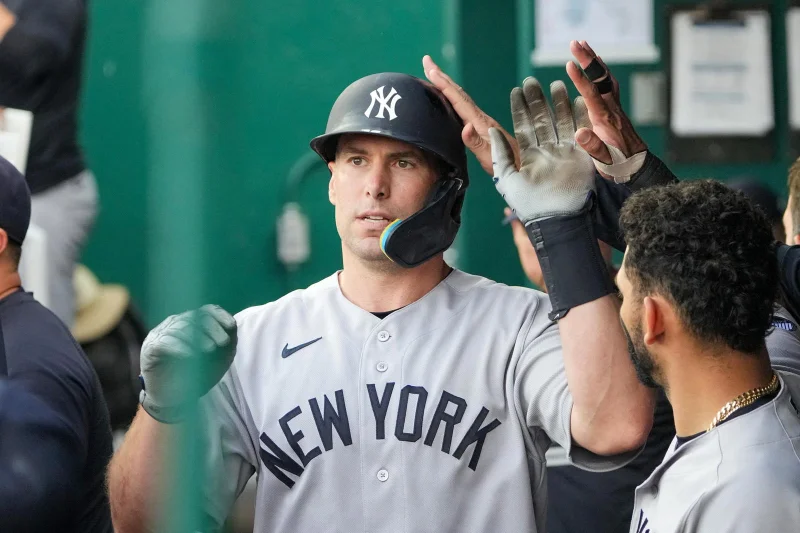
Paul Goldschmidt is still hitting like a player who belongs in the middle of a lineup, even if the Yankees may soon have a different plan for him. The 38-year-old is batting.263/.363/.500 with five home runs and 15 RBI in 113 plate appearances this season, and his start has given New York another reliable right-handed bat while Giancarlo Stanton works his way back from a calf injury.
The production has not been hollow. Goldschmidt owns a.235 ISO in 2026, up from.129 in his debut season in New York, and his.296 BABIP sits just above the approximate league average of.290. He has paired that offense with real value in the field, posting plus-1 DRS and plus-2 OAA, while his 48.7 percent hard-hit rate and 14.5 percent barrel rate both point to a hitter doing damage when he connects. His 10.6 percent walk rate is also up from 2025.
New York signed Goldschmidt late in the offseason to a one-year deal, and the fit has worked better than many expected. He has been useful at first base, steady enough on defense and productive enough at the plate to stay in the everyday conversation even as the Yankees have gone through a rough stretch before scoring 22 runs in their last two games.
The problem is the roster squeeze. Stanton has begun running as he recovers, and once he is healthy, Goldschmidt can no longer be an everyday player. Ben Rice has mostly handled the designated hitter job with Stanton out, but the Yankees could in theory move Rice behind the plate, even though he has not caught a game all year. The club is also staying with Austin Wells at catcher despite his.562 OPS, leaving fewer clean paths for Goldschmidt to keep the same volume of at-bats.
So Goldschmidt’s season has reached a familiar late-career crossroads: the bat still plays, the glove still matters, and the numbers still justify his place. What the Yankees have not answered is how they will divide first base, designated hitter and catching duties once Stanton is fully available, and that decision may determine whether Goldschmidt remains an everyday presence or shifts into a shorter, more selective role.