


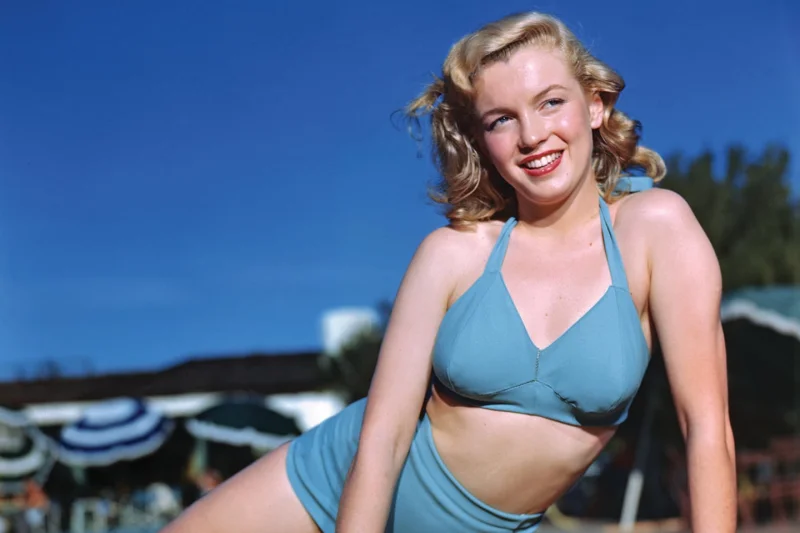
Four days before what would have been Marilyn Monroe’s 100th birthday, two women who knew her best were still describing a star who was far more than the image built around her. Amy Greene, who shared her home with Monroe for several years in the mid-1950s, and Jane Russell, her co-star in Gentlemen Prefer Blondes, remembered a woman they called warm, funny and deeply loyal.
That matters because Monroe lived for 36 years and has spent more than six decades as one of Hollywood’s most recognizable ghosts. Her name still pulls attention, but the renewed focus now is on the private life that sat behind the screen persona, and on the people who can still speak about it from memory rather than myth. Those recollections are arriving just as the centenary approaches, giving old stories new weight.
Greene’s memories are especially revealing because they begin with suspicion. She recalled being warned off Monroe with blunt disbelief — “Are you out of your mind to have that woman in your house?” — and pushing back just as hard: “What’s wrong with you? There’s nothing there. They’re business partners!” Greene said she and Monroe eventually became real friends, adding that once they knew each other, she understood Monroe would never betray her by “banging Milton.” Milton Greene, the photographer with whom Monroe formed Marilyn Monroe Productions in 1955, was Amy Greene’s husband.
Russell’s recollection lands with the same force. In her 1985 memoir, My Path and My Detours, she wrote about being at the beach in August 1962 with close female friends and suddenly thinking of Monroe. “I thought of Marilyn,” she wrote. “I wished I had her phone number, because I knew she belonged there, where we were all laughing about our problems.” The next day, Russell got word that Monroe had died. The memory cuts against the old idea that Monroe’s place in the culture made it hard for people to imagine her as a real friend to women, even though people around her say she was exactly that.
Others who crossed paths with Monroe describe the same side of her. Mamie Van Doren, who in 1953 was contracted as Universal’s answer to Monroe, said she was “a lovely person [who] didn’t have a bad bone in her body.” Monroe had already shown that range on screen, co-starring with Lauren Bacall and Betty Grable in How to Marry a Millionaire in 1953 and forming a close bond with Eileen Heckart’s Vera in Bus Stop, but the stories now being revisited are about the off-camera version: the one who listened, laughed and stayed present.
That is why these memories still resonate. The centennial is prompting a fresh look at Monroe not as an untouchable sex symbol, but as a woman who built friendships that lasted. The unanswered part is not whether those bonds existed; it is how often the private Marilyn was allowed to show herself before fame turned her into an icon first and a person second.
