


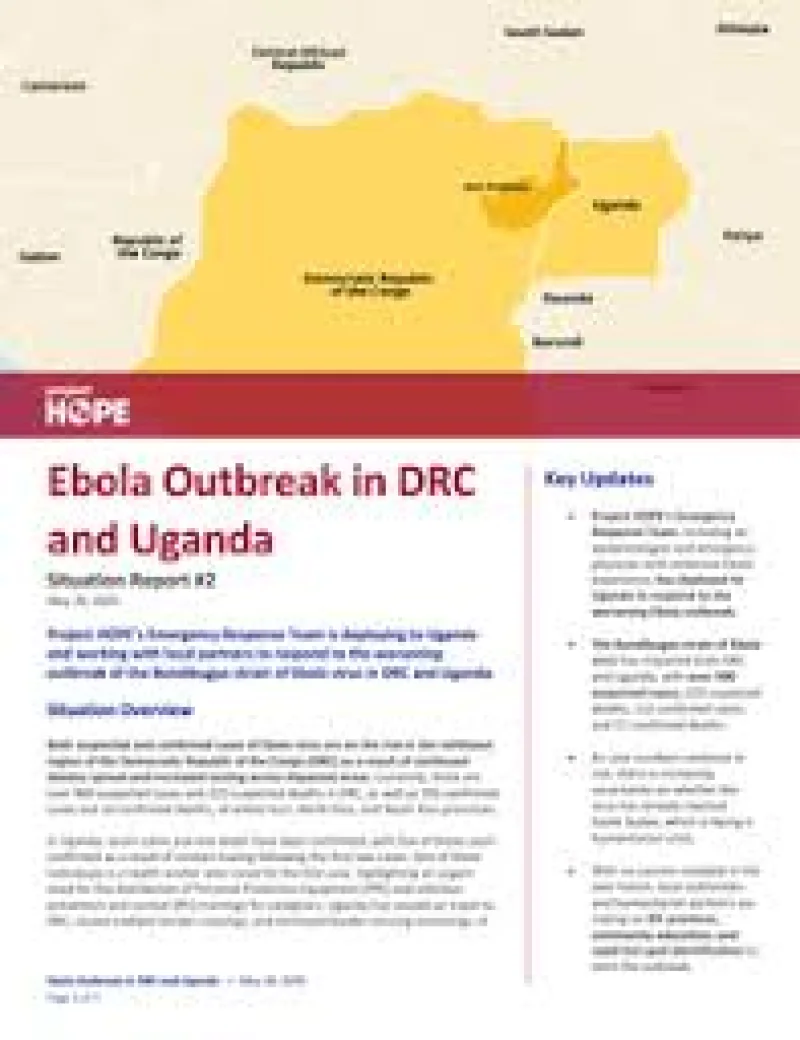
The World Health Organization said the Ebola outbreak in the Democratic Republic of the Congo is killing between 30% and 50% of confirmed patients, and its chief landed in Kinshasa on Thursday to press containment efforts. Anaïs Legand said the revised estimate is based on confirmed cases and means “up to five out of 10 people are likely to die.”
The update lands as the agency tries to show it still has room to contain the outbreak. One patient recovered and was discharged from a health centre in the DRC on 27 May after two negative tests, the first recovery to be confirmed since the outbreak was declared on 15 May. But the WHO also said it had already recorded 10 confirmed Ebola deaths and 223 suspected deaths, with more than 1,000 confirmed and suspected cases in all.
Tedros Adhanom Ghebreyesus was due to travel to Ituri province on Friday, but the trip was pushed back by a day. He said the WHO does not support travel bans because they do not help much, even as Uganda announced on Wednesday that it would immediately close its border with the DRC after recording one Ebola death and eight additional cases. The WHO warned that border closures can push people toward informal crossings, making the disease harder to monitor and contain.
That friction matters because the outbreak is unfolding in eastern DRC, a mineral-rich region contested by armed groups and already strained by displacement. More than 245,000 people have fled eastern DRC to neighbouring countries since January 2025, raising the chance that the virus could move before it is fully seen. Tedros made a direct appeal to all warring parties in the region to declare a ceasefire, saying conflict and displacement make everything harder and that there is no cause worth condemning innocent people to death from a preventable disease.
The DRC is facing its 17th recorded Ebola epidemic, and the disease has averaged a 50% death rate across outbreaks there since it was first identified in 1976. The current strain, Bundibugyo Ebola, has no approved treatment, though the WHO said advisory groups have recommended clinical trials of vaccines and therapies. Jean Kaseya has said a vaccine could be ready by the end of the year, but the more immediate question is whether containment can outrun a virus that may already have circulated undetected for some time. Tedros is now due to reach Ituri a day later than planned, and the next test is whether the region can keep the outbreak inside the cases already counted.
