


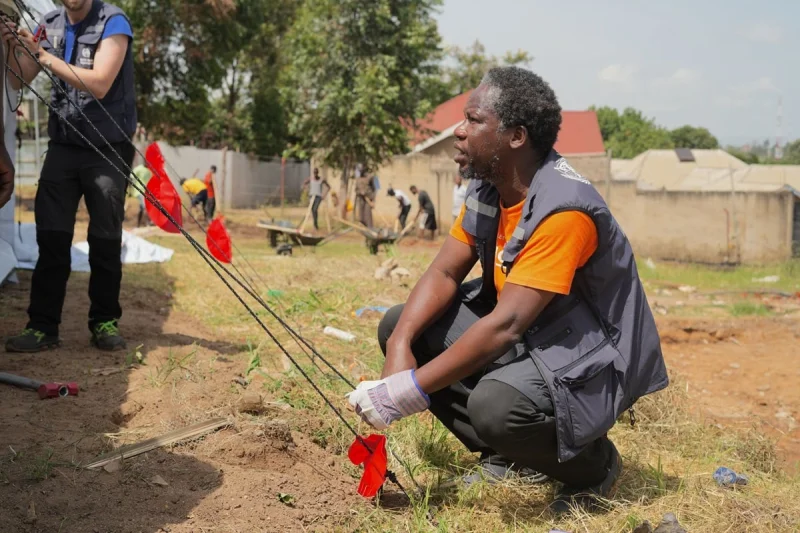
The World Health Organization has convened expert and advisory groups after an outbreak of Ebola disease caused by Bundibugyo virus in the Democratic Republic of the Congo, with cases also reported in Uganda. The meetings are meant to guide the response on candidate vaccines and therapeutics for Bundibugyo virus disease and to assess how licensed Ebola vaccines might be used during outbreaks.
WHO said the groups recommended that all products identified and considered should be used only within clinical trials. There are currently no licensed therapeutics or vaccines specifically approved for the prevention and treatment of Bundibugyo virus disease, leaving health authorities to rely on research and outbreak control measures while they look for tools that can be tested safely in the field.
The agency said it convened a series of meetings with the WHO R&D Blueprint technical advisory groups on candidate vaccines and therapeutics, and also brought in the Strategic Advisory Group of Experts on Immunization and its Ebola vaccine working group. SAGE is WHO’s principal advisory group on vaccines and immunization, charged with advising on policy and strategy from vaccine technology to delivery and links with other health interventions.
The WHO R&D Blueprint is a global initiative that allows the rapid activation of research and development activities during epidemics. Its goal is to fast-track proven tests, vaccines and medicines that can save lives and avert large-scale crises, and WHO said the current outbreak made that work urgent.
WHO said it is working closely with the governments of the Democratic Republic of the Congo and Uganda to facilitate research evaluation of the products. The agency, both governments, Africa CDC, ANRS Emerging infectious diseases and other scientific partners are developing and implementing protocols to assess the safety and efficacy of prioritized therapeutics through clinical field trials.
That research, WHO said, must follow the highest ethical standards under the leadership of national health authorities and in close consultation with affected communities. The agency also called for accelerated access to essential supplies, stronger community protection, engagement and trust, and coordinated investment in research, development and evaluation of countermeasures.
For now, WHO says the priority is to stop transmission through disease surveillance, rapid testing and diagnosis, contact tracing, isolation and care for patients, infection prevention and control, community engagement and safe and dignified burials. The immediate fight is still the outbreak itself, but the outcome of these meetings will shape whether any experimental vaccine or treatment can move from discussion to controlled testing as the response continues.
