


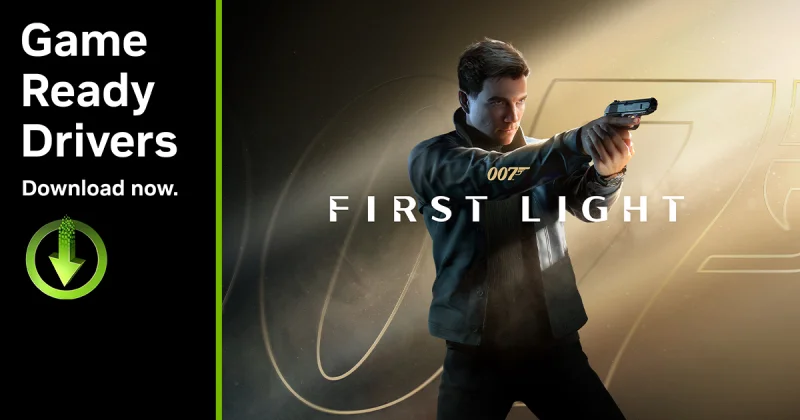
James Bond is back on a console, and this time he is young enough to still be learning how to wear the suit. 007 First Light, developed by IO Interactive and available on PC, Xbox and PlayStation 5, follows Bond in his pre-00 days, with Patrick Gibson voicing and performing the role as the character is shaped into the icon audiences know.
The game lands with more urgency because Bond has not had a great video game in decades, and the broader franchise had not produced a film in five years before this new outing arrived. That makes 007 First Light less like another licensed release and more like a test of whether IO Interactive can turn one of pop culture’s most overused names into something that feels fresh again.
In the game, M is not yet the granite figure of later stories but a green leader trying to make her mark, while Q comes across as an enjoyably urbane quartermaster who introduces Bond to the pleasures of vinyl. One scene has Q teaching him how to tie a bow tie, and that small moment captures what the game is trying to do: show Bond arriving at the familiar surfaces of the myth through character beats rather than simply handing them to him. The review frames 007 First Light as a prequel that builds his iconic looks and traits step by step.
The structure helps. IO Interactive has moved away from the open-ended design of Hitman and instead leans into linear storytelling, with moments of social stealth repurposed for cinematic forward thrust. One chapter is little more than a glorified training montage, jumping between getaway driving, stealth and gunplay, while a Slovakian castle provides the kind of travel-worn glamour the series trades on. Even the studio’s Glacier engine sounds like a secret codename from a Bond villain’s lair, which is fitting for a game that wants every system to feel like part of the same machine.
That machine is not subtle, and it does not try to be. The guns are described as enjoyably punchy, scripted fights favor explosive theatrics over strategy, and fist fights have Bond barging bodies into bookshelves and battering enemies with nearby objects. Those scenes do not ask for patience. They ask for momentum, and the game seems happiest when it is hurtling forward through chaos instead of standing still and explaining itself.
The friction point is that this Bond is still becoming Bond, and the game knows it. By placing him before 00 status, 007 First Light trades the fantasy of a fully formed superspy for something a little messier and more human, but it also has to prove that the transition itself is enough to carry a full release. On the evidence of the review, IO Interactive has not just made a competent license tie-in. It has finally given Bond a game that understands why the character matters before he ever reaches the gun barrel pose.
That is the answer for today. The selling point is not nostalgia, and it is not brand recognition alone. It is that 007 First Light uses Bond’s origin story to make the familiar feel newly earned, and that gives the long-dormant series a real shot at relevance again.
