


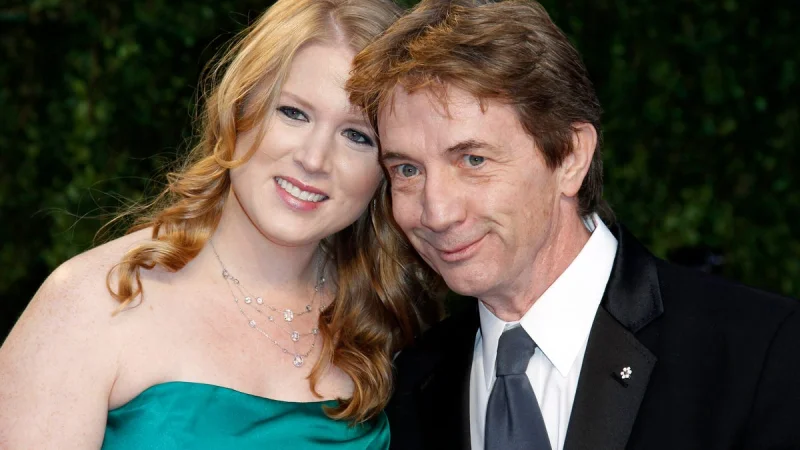
Martin Short asked a friend to check on his eldest daughter on Feb. 23 after he had not heard from her for more than 24 hours. The welfare check ended with police forcing entry into her room and finding Katherine Hartley Short dead on her bed.
A representative for Short confirmed the death the next day, on Feb. 24. The family later said it was devastated by the loss and asked for privacy, while the man known for keeping his public life tight around the edges was left to absorb a second blow that was both sudden and deeply familiar.
On May 10, Short spoke about his daughter’s death on CBS Sunday Morning and called the past few months “a nightmare for the family.” He said Katherine had struggled for a long time with extreme mental health issues, including borderline personality disorder, and said he wanted more people to take “mental health out of the shadows.”
He also drew a line between the grief around his daughter and the loss of his wife, Nancy Dolman Short, who died of ovarian cancer in 2010. “But the understanding that mental health and cancer, like my wife [had], are both diseases, and sometimes with diseases, they are terminal,” he said. He added that he did not want people to hide from the word suicide, but to accept that it can be “the last stage of an illness.”
That perspective came from years of hard experience. Short and Nancy Dolman Short had three children together: Katherine Hartley Short, Oliver Short and Henry Short. By the time he was 20, he had already lived through the deaths of his brother, mother and father, a run of loss that helps explain why he spoke about his daughter in the language of illness, finality and memory rather than mystery.
The events of Feb. 23 unfolded quickly once the friend arrived at Katherine’s home with a spare key. After finding a note on her bedroom door, the friend called 911. Authorities later entered the room and found her dead. That chain of events is what turned concern into confirmation, and it is why the family’s statement the next day landed with such force: there was no softer version of what had happened, only the public acknowledgment that a daughter had died and a family was asking to be left alone.
Short said he had learned early that loss is part of life, but that some losses come too soon. In the months after Katherine’s death, he returned to that idea with a simple image of the people he has lost as being “in the next room for a while.” For a family already marked by cancer, grief and long illness, the question now is not what happened in February. It is how much more openly the subject of mental health can be discussed before another family has to find out the hard way.
