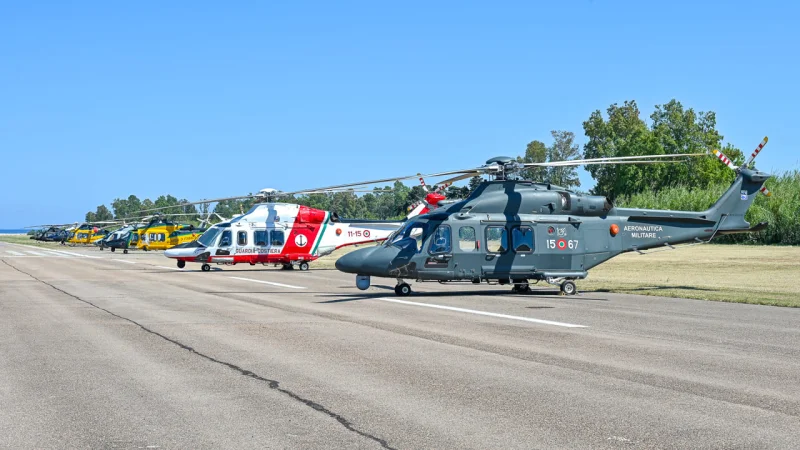
Grifone 2026 began in Tortolì on 27 May, opening three days of search-and-rescue air drills in Sardinia that run through 29 May. The exercise is the main international event in Italy’s air-based rescue sector and is being carried out with the Aeronautica Militare at the center of a wide joint operation.
The exercise brings together aircraft and personnel from the Aeronautica Militare, Esercito and Arma dei carabinieri, alongside Polizia di Stato, Guardia di finanza, Guardia costiera and Vigili del fuoco. A Spanish air force component is also taking part. For readers, the scale matters because this is not a routine training flight: it is the yearly test of how fast and how well multiple services can move together when lives are at risk.
Ground operations are being coordinated jointly by the Corpo nazionale del soccorso alpino e speleologico and the Corpo nazionale dei vigili del fuoco. The scenarios are built to simulate searches for missing people, the recovery of injured people in hard-to-reach areas and aeronautical emergencies linked to flight incidents. Those are the kinds of missions that demand more than one chain of command, especially when conditions are difficult and the terrain does not forgive delays.
Grifone is held every year by the Aeronautica Militare and is focused on complex rescue work in mountain and otherwise impervious environments. That is why Sardinia has become the stage for this edition: the exercise is meant to stress the coordination needed when aircraft, ground teams and state bodies must act as one, not as separate agencies working in parallel.
The tension in exercises like this is not in what is announced, but in what must be proved. A multinational, multi-service rescue drill can be planned on paper in advance; the real test is whether the people taking part can find missing victims, recover the injured and manage an air emergency without losing time to confusion over roles. That is what makes the two-day window in Sardinia so important today.
Journalists will get a closer look on 29 May, when a Media Day is scheduled to let them observe flight activity and learn more about the techniques and procedures used during the exercise. By then, the public will have a clearer view of how the forces involved work together, and whether the drill delivers the kind of coordination the real missions would require.