


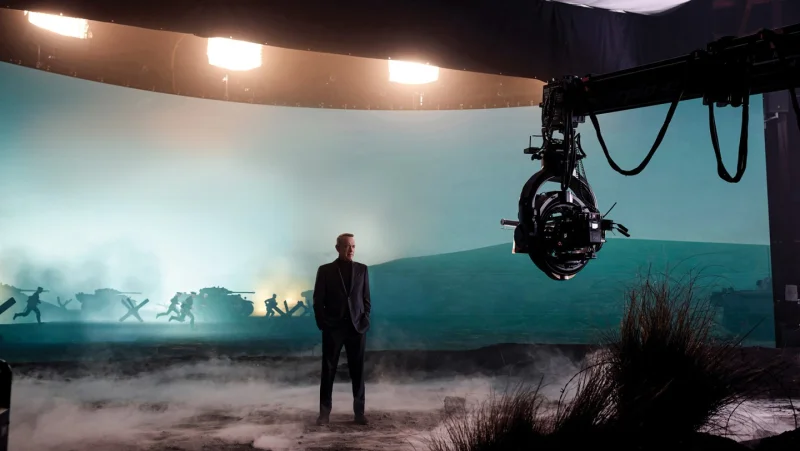
World War II with Tom Hanks opens by declaring itself in the largest terms possible. In the first seconds, Hanks says the war was “the largest event in human history,” and the 20-part documentary sets out to make good on that claim with a scale that places it among the biggest documentaries ever made.
The series begins with the same sense of force. Hanks appears at the start and end of each installment, guiding viewers through a story that runs from Hitler’s rise to power to the Germans’ push through the Ardennes forest into France in 1940 and the evacuation from Dunkirk. The opening triple bill also reaches back to September 1, 1939, when Germany invaded Poland, and it does so with a pace that keeps the war moving rather than embalming it.
That ambition matters because the format is not simply large, it is old-fashioned in a useful way. Twenty episodes is fewer than ITV’s The World at War, which ran to 26, but the comparison is enough to place this series in rare company. In an era when documentary series are often compressed into a handful of episodes, World War II with Tom Hanks stretches out across the conflict with the confidence that viewers will stay with it.
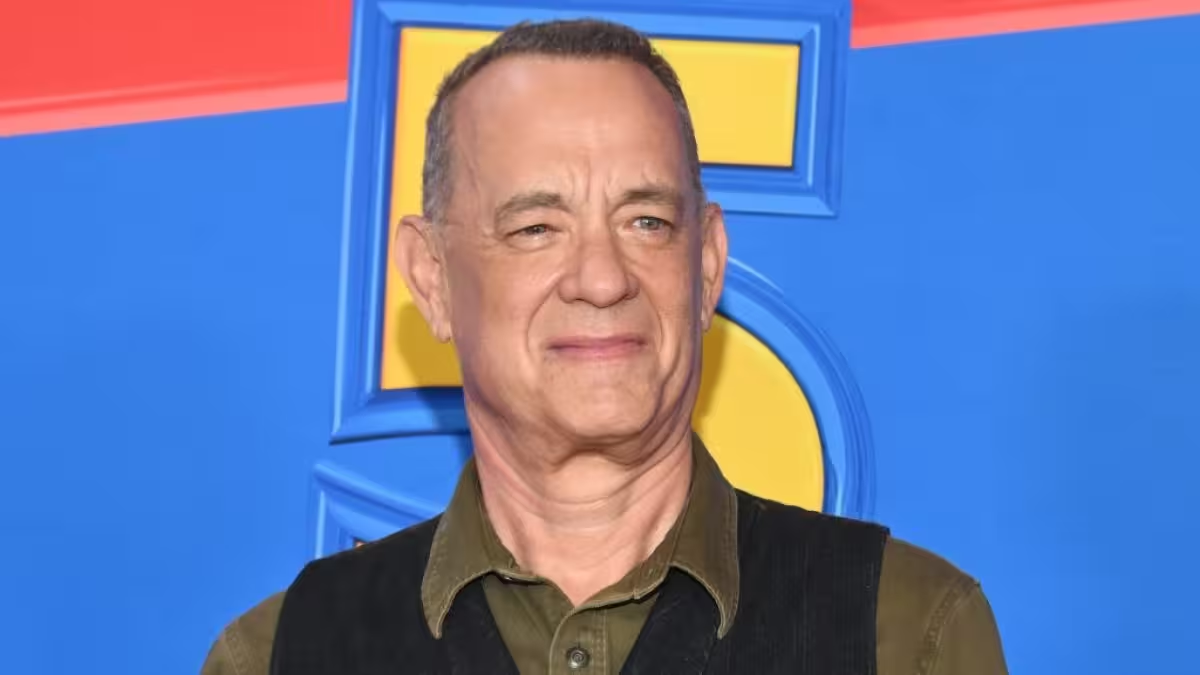
The weight of the series also comes from the people it uses to tell the story. Modern documentary makers no longer have living first-hand witnesses from the war, so the series leans on academics and popular historians as talking heads, while archive film carries much of the burden. Some of that footage is newly discovered, and it gives the production a sense of discovery rather than simple recitation.
Dan Carlin is one of the voices that cuts through most sharply. He appears in the series saying, “September 1st, 1939! A storm breaks over Poland!” It is the sort of line that could sound exaggerated in the wrong setting, but here it works because the series keeps returning to the same core idea: the war began in one place and quickly engulfed everyone.
That is why the opening matters today. The 2020s have produced a wave of retrospective war documentaries, but few can still rely on living memory. This one has to build its authority from image, narration and analysis, and it does so by treating the war not as a sealed historical chapter but as a world event that altered everything, to use Hanks’s own words. The series makes that case by moving from one front to another without losing sight of the larger machinery beneath it.
The result is a documentary built on scale, but not emptiness. Its best moments come when the narration, the archive and the historians all point in the same direction. The question it answers is the one it poses at the start: whether a modern series can still make the Second World War feel vast. On the evidence of these 20 episodes, it can.
